Category: Legal & Compliance

  • How to Calculate Premium in a Business Sale?

    How to Calculate Premium in a Business Sale?

    When an established running business is sold, the buyer may pay more than the value of its identifiable net assets. This additional amount is generally attributable to the business’s earning capacity, brand, customer base, reputation, licences, systems, trained workforce and future potential.

    Illustrative Example

    Suppose a running manufacturing business has the following assets:

    • Land & Building – ₹2.00 Crore
    • Plant & Machinery – ₹40 Lakh
    • Inventory – ₹30 Lakh
    • Other Assets – ₹10 Lakh
    • Less: Liabilities – ₹20 Lakh

    Net Identifiable Asset Value = ₹2.60 Crore

    Now assume the business has:

    • Normalised EBITDA – ₹60 Lakh
    • Applicable EBITDA Multiple – 5×

    Therefore:

    Estimated Business Value = ₹60 Lakh × 5 = ₹3.00 Crore

    After considering debt and cash:

    • Enterprise Value – ₹3.00 Crore
    • Less: Debt – ₹30 Lakh
    • Add: Cash – ₹10 Lakh

    Indicative Equity Value = ₹2.80 Crore

    How is the Premium Calculated?

    If the fair value of identifiable net assets is ₹2.60 Crore and the indicative equity value is ₹2.80 Crore:

    Business Premium = ₹2.80 Crore − ₹2.60 Crore

    Business Premium = ₹20 Lakh

    This ₹20 lakh represents the value attributable to factors beyond the identifiable net assets, such as:

    • Established customer relationships
    • Brand and market reputation
    • Existing business operations
    • Licences and approvals
    • Trained employees and operating systems
    • Established suppliers and distribution network
    • Future earning potential

    Important Point

    The premium should not be determined arbitrarily. A proper business valuation should consider profitability, normalised earnings, industry multiples, growth prospects, assets, liabilities, working capital, market conditions and comparable transactions.

    Therefore, in a business sale:

    Asset Value + Value of Business/Earning Capacity = Overall Business Value

    The actual premium depends on the facts and circumstances of each business and should be supported by an appropriate valuation methodology.

    Planning to sell or acquire a business? BizzXchange helps business owners and buyers make informed decisions with professional business valuation, due diligence, company transfer, and merger & acquisition services. Get expert guidance to understand your business value, assess potential opportunities, and approach your transaction with greater clarity and confidence.
  • SME IPO issue process

    SME IPO issue process

    The SME IPO process (Small and Medium Enterprise Initial Public Offering) is similar to a mainboard IPO but is simplified and designed for smaller companies that want to raise capital and get listed on a SME platform of stock exchanges — like BSE SME or NSE Emerge.

    Here’s a clear step-by-step explanation 👇

    1. Eligibility Check

    Before applying, the SME must meet some basic conditions:

    Before applying, a company must ensure it fulfills these basic conditions:

    Type of Company:Public Limited Company (Private Limited must convert first)
    Post-Issue Paid-up Capital:Minimum ₹1 crore and up to ₹25 crore
    Track Record / Profitability:Positive net worth and profitability in at least 2 of the last 3 financial years (may vary slightly as per exchange)
    Net Tangible Assets:Minimum ₹1.5 crore as per latest audited balance sheet
    Net Worth:Minimum ₹1 crore
    Number of Shareholders (Post-Issue):Minimum 50 (to ensure liquidity)
    Promoter Holding:Should be in demat form and held for at least 3 years (pre-issue)
    Dematerialisation:Entire shareholding must be in demat form

    👉 SME IPOs are listed on NSE Emerge or BSE SME — not on the main board initially.

    2. Appointment of Advisors

    The company appoints key professionals:

    • Merchant Banker (Lead Manager) – to manage the IPO
    • Legal Advisor – to handle legal documentation
    • Registrar to Issue – to handle applications and allotments
    • Auditor and Company Secretary – for compliance and financial certifications

    3. Due Diligence and Documentation

    The merchant banker conducts a due diligence check on the company’s:

    • Financials
    • Legal cases
    • Promoter background
    • Business model and risks

    Then prepares documents like:

    • Draft Prospectus (DRHP)
    • Audited Financials
    • Legal Reports

    4. Filing of DRHP with Exchange

    The Draft Red Herring Prospectus (DRHP) is submitted to the BSE SME or NSE Emerge and SEBI for review.

    • Exchanges check compliance and may ask for clarifications.
    • After approval, the company files the final prospectus.

    5. IPO Marketing (Roadshows)

    The company and merchant banker conduct investor meetings and presentations to attract investors — known as roadshows.

    6. IPO Opening

    The issue opens for public subscription (usually 3–5 days).
    Investors (mainly HNI, retail, and institutional) can apply through ASBA in their banks.

     7. Allotment and Listing

    • After closure, the Registrar finalizes the allotment.
    • Shares are credited to investor demat accounts.
    • The company gets listed on the SME platform (NSE Emerge or BSE SME).

    8. Post-Listing Requirements

    After listing, the company must follow SME-specific compliance, such as:

    • Quarterly financial results
    • Annual reports
    • Minimum public shareholding norms

    After 2–3 years of good performance, the company can migrate to the Main Board (BSE/NSE).

  • GST implication on business transfer or merger?

    GST implication on business transfer or merger?

    Implication of GST on Transfer of business by the mode of Meger or normal transfer

    When a business is transferred or merged, the Goods and Services Tax (GST) implications depend on the nature of the transaction — whether it is a transfer of a going concern, merger/amalgamation, or slump sale/asset sale. Here’s a detailed breakdown:

     1. Transfer of a Going Concern

    A “transfer of a going concern” means transferring a business as a whole, including assets and liabilities, that is capable of being carried on by the new owner.

    GST Treatment:

    • Exempt Supply under Notification No. 12/2017-Central Tax (Rate) dated 28 June 2017, Entry 2:

    “Services by way of transfer of a going concern, as a whole or an independent part thereof” are exempt from GST.

    • Implication:
      • No GST is payable on the transfer consideration.
      • It must genuinely be a “going concern” (i.e., a live business with continuity of operations).
      • The transferee usually assumes assets, liabilities, employees, and ongoing contracts.
    • Input Tax Credit (ITC):
      • ITC on inputs and capital goods used for the transferred business may be transferred to the transferee under Rule 41 of the CGST Rules, subject to filing Form GST ITC-02.

    2. Amalgamation / Merger / Demerger

    When two or more companies merge under a court or NCLT order, the GST effects are as follows:

    🧾 GST Treatment:

    • Schedule II, Entry 4(c) of the CGST Act:
      • Transfer of business assets is not treated as a supply if it occurs by virtue of a merger or amalgamation under a court order.
    • Effective Date of Merger:
      • If the order specifies a “backdated” effective date, supplies made between that date and the date of the order are treated as if made by the transferee company.
      • The transferee is liable to pay tax on such supplies.

    Input Tax Credit (ITC):

    • ITC balance can be transferred to the new entity under Rule 41(1) using Form GST ITC-02.
    • Proper documentation of asset/liability transfer is essential.

    3. Slump Sale or Asset Sale (Not Going Concern)

    If the transfer is not a going concern, but rather a sale of individual assets, then GST applies normally.

     GST Implications:

    • Treated as supply of goods (if assets) or services (if rights or goodwill).
    • Applicable GST rate depends on the nature of the asset (e.g., 18% on goodwill, 5%/12% on machinery, etc.).
    • ITC reversal may apply to the seller for assets sold if previously claimed.

    4. Compliance Points

    Transaction TypeGST PayableITC Transfer AllowedKey Form
    Transfer of Going Concern❌ Exempt✅ YesGST ITC-02
    Merger/Amalgamation (Court approved)❌ (subject to conditions)✅ YesGST ITC-02
    Slump Sale/Asset Sale (Not Going Concern)✅ Yes, based on asset type❌ Generally NoNormal Returns

    Key Considerations

    • Ensure proper documentation and valuation of assets/liabilities.
    • Inform jurisdictional officer of change in business constitution.
    • Amend GST registration details or apply for a new registration (for transferee).
    • Maintain proof of continuity (contracts, staff, customers) for going concern status.
  • Factors to Consider When Acquiring a Running Business?

    Factors to Consider When Acquiring a Running Business?

    Acquiring a business is not just about paying money and taking over—it’s about knowing exactly what you are buying, what risks you are taking, and what future potential the business has. Below is a detailed breakdown:

    1. Financial Health

    This is the backbone of any acquisition. You need to check whether the business is really profitable or if the numbers are just on paper.

    • Financial Statements: Review at least the past 3–5 years’ audited balance sheet, profit & loss account, and cash flow statement. This shows revenue trends, profitability, and how efficiently the company handles money.
    • Debts & Liabilities: Check if the business has unpaid loans, overdrafts, tax dues, or vendor payments. These may become your responsibility after purchase.
    • Cash Flow Analysis: Sometimes a business shows profit but has poor cash flow (money stuck in receivables). You must ensure it generates healthy and consistent cash flow.
    • Assets: Check the real value of land, machinery, furniture, technology, or inventory. Sometimes the “book value” is very different from market value.
    • Profitability Ratios: Study gross margin, net profit margin, return on investment (ROI), and debt-to-equity ratio to measure financial stability. BizzXchange can help you in all business acquisition plan.

    2. Legal & Compliance

    A running business should be legally clean. Otherwise, you may inherit lawsuits and penalties.

    • Licenses & Permits: Ensure the business has all required licenses (FSSAI for food, GST registration, Shops & Establishments Act license, pollution control certificates, etc.).
    • Litigation: Verify if there are ongoing court cases or disputes with employees, suppliers, or government authorities.
    • Contracts & Agreements: Review lease agreements, franchise contracts, vendor/supplier contracts, and client contracts.
    • Intellectual Property: Ensure trademarks, patents, or copyrights are properly registered and transferred.
    • Tax Compliance: Check GST, Income Tax, TDS, and other filings for past years. Any pending notices may become your liability.

    3. Operational Factors

    This decides how smoothly the business runs on a daily basis.

    • Business Processes: Study how the business operates—production process, sales process, service delivery.
    • Machinery & Infrastructure: Check the age, efficiency, and maintenance of equipment. Old machines may need heavy replacement costs.
    • Suppliers & Vendors: Assess if the business depends heavily on one supplier. If yes, it’s risky.
    • Technology: Outdated software, ERP, or IT systems can increase costs later.
    • Inventory: Make sure the stock in hand is usable and not obsolete.

    4. Human Resources

    Employees are the real asset of a business.

    • Employee Strength: How many staff members are there, and what are their roles?
    • Contracts & Salaries: Check employment contracts, pending PF/ESI, gratuity, or bonus obligations.
    • Skill & Loyalty: Some businesses depend heavily on key employees. If they leave, the business may collapse.
    • Founder Dependency: If the founder is the “face” of the business (example: consultancy firms), ensure customers will stay even after the founder exits.

    5. Market & Business Model

    A running business may look profitable today, but the market may be shrinking.

    • Industry Trends: Study whether the industry is growing, stable, or declining.
    • Customer Base: Analyze the mix of repeat customers vs. one-time buyers. A strong repeat base means stable income.
    • Competitor Analysis: Understand who the main competitors are, their pricing, and their strengths.
    • Scalability: See if the business model can expand to new cities, states, or online channels.

    6. Intangible Factors

    These are things you can’t “touch” but have huge value.

    • Brand Reputation: What do customers and the market think about this business? Any negative image will affect you.
    • Goodwill: Long-standing businesses usually have goodwill with customers, suppliers, and even banks.
    • Customer Contracts: Ongoing contracts with major clients are a plus point.
    • Distribution Channels: A well-established supply chain, dealer network, or online presence adds value.

    7. Valuation & Deal Structure

    Finally, it comes down to how much you should pay and under what conditions.

    • Valuation Methods:
      • Asset-Based Valuation (value of assets minus liabilities).
      • Income-Based Valuation (present value of future cash flows).
      • Market-Based Valuation (comparing with similar businesses).
    • Goodwill Component: Ensure you are not overpaying for goodwill (brand value).
    • Deal Structure: Decide whether payment is full upfront, installments, or performance-linked (earn-out).
    • Indemnities & Warranties: Seller should guarantee that all disclosed information is true; if hidden liabilities arise, the seller should be responsible.

    ✅ Conclusion

    Buying a running business can be highly rewarding because you get an existing customer base, employees, and systems. But a wrong decision can drain your money if you inherit hidden debts, legal issues, or declining market demand.

    👉 That’s why Due Diligence (a deep financial, legal, and operational audit before finalizing the deal) is the most important step. Always involve a CA (CharteredAccountant), lawyer, and industry expert to verify all aspects before closing the acquisition.

  • What is partnership firm and Process for takeover of partnership firm by another person?

    What is partnership firm and Process for takeover of partnership firm by another person?

    What is a Partnership Firm?

    A partnership firm is a business structure formed when two or more people agree to carry on a business together and share profits and losses.

    Key Features:

    1. Created by Agreement
      • Partners sign a Partnership Deed which defines rights, duties, profit-sharing ratio, etc.
    2. Governed by Law
      • In India, it is governed by the Indian Partnership Act, 1932.
    3. Not a Separate Legal Entity
      • Unlike a company (Pvt. Ltd. or Ltd.), a partnership firm is not separate from its partners.
      • This means partners are personally liable for debts.
    4. Registration
      • Registration with the Registrar of Firms (RoF) is optional but highly recommended.
      • Registered firms can sue and be sued in their own name.
    5. Types of Partners
      • Active partners (manage business)
      • Sleeping partners (only invest, don’t manage)
      • Minor admitted to benefits of partnership

    Process for Takeover of Partnership Firm by Another Person

    Since the firm is not a separate entity, takeover doesn’t happen like a company share transfer. Instead, takeover means transfer of ownership and control through legal agreements.

    There are two main methods:

    Method A: Admission & Retirement of Partners

    Here, the firm continues with the same registration, but ownership shifts.

    Step-by-Step:

    1. Agreement with Existing Partners
      • New person (buyer) agrees to join as a partner.
      • Old partners agree to retire gradually or fully.
    2. Drafting of Deed
      • Prepare an Admission-cum-Retirement Deed (or just Retirement Deed if old partners exit).
      • This deed records:
        • Admission of new partner
        • Retirement of existing partner(s)
        • Transfer of capital and profit share to new partner
        • Indemnity (old partners not liable for future debts)
    3. Settlement of Accounts
      • Retiring partners are paid their capital + profit share + goodwill value.
    4. Registrar of Firms Filing
      • File change in constitution of firm with Registrar (if registered).
    5. Other Formalities
      • Update GST, PAN, trade license, bank accounts with new partner details.

    👉 Result: The business continues with the same firm name, licenses, and goodwill, but under new ownership.

    Method B: Business Transfer / Sale of Assets

    Here, the entire business is sold to another person or entity.

    Step-by-Step:

    1. Valuation of Business
      • Assess value of assets (land, machinery, stock), goodwill, and liabilities.
    2. Business Transfer Agreement (BTA)
      • Partners enter into a Business Transfer Agreement with the buyer.
      • Agreement mentions:
        • List of assets transferred
        • Liabilities assumed by buyer
        • Consideration (lump sum or breakup)
        • Transfer of employees, contracts, licenses
        • Non-compete clause (old partners won’t start same business nearby)
    3. Dissolution or Continuation
      • Usually, the firm is dissolved after the sale.
      • Buyer continues business as:
        • Sole proprietorship, or
        • New partnership, or
        • LLP / Pvt. Ltd. Company
    4. Transfer of Licenses
      • Buyer must update or apply for fresh:
        • GST registration
        • Trade licenses, industry-specific approvals (FSSAI, Drug License, etc.)
        • Shops & Establishments Act registration
    5. Settlement & Handover
      • Buyer pays agreed price.
      • Partners transfer possession of assets, records, digital accounts, bank accounts.

    👉 Result: Old firm ends (or becomes inactive), and buyer runs the same business under new ownership/structure.

    General Steps Common to Both Methods

    Whether takeover happens by retirement/admission or business transfer, these steps are essential:

    1. Negotiation & Valuation
      • Finalize price and scope (assets, goodwill, contracts).
    2. Due Diligence
      • Check debts, tax dues, legal disputes.
    3. Draft Legal Agreements
      • Retirement/Admission Deed or Business Transfer Agreement.
    4. Compliance & Filings
      • Update with Registrar of Firms (if registered).
      • Modify GST, PAN, bank accounts.
      • Update licenses/registrations.
    5. Payment & Handover
      • Transfer of money, settlement of accounts.
      • Handover assets, records, employees, contracts.
    6. Post-Takeover
      • Inform suppliers, vendors, customers.
      • Issue public notice (for safety against old liabilities).
      • Continue or rebrand business.

    BizzXchange helps partnership firm aquisition.

    ✅ Quick Comparison:

    PointAdmission & Retirement      Business Transfer
    Firm NameSame firm continues      Old firm may dissolve; buyer runs new firm
    LicensesUsually continue       Need transfer/new registrations
    GoodwillAutomatically continues       Purchased along with assets
    Legal EntityPartnership firm remains       Buyer sets up new structure
    Best WhenBuyer wants same setup       Buyer wants fresh start with assets
  • Process of LLP to Private Limited Company Conversion after Takeover

    Process of LLP to Private Limited Company Conversion after Takeover

    Complete the Takeover of LLP process

    • The LLP must first be taken over properly.
    • This means:
      • New owners become partners of the LLP.
      • The LLP agreement is updated to record new partners.
      • Old partners (if any) exit.
    • Once this takeover is complete, the conversion process can begin.

    Obtain Consent from Partners

    • All current partners of the LLP must agree to convert it into a Private Limited Company.
    • A resolution is passed by the partners giving their approval.
    • This consent is mandatory because conversion changes the legal structure.

    Name Approval of New Company

    • Apply for name reservation through RUN (Reserve Unique Name) on the MCA portal.
    • The name should end with “Private Limited”.
    • Example: “GreenTech LLP” → “GreenTech Private Limited Company”.
    • If the LLP wants to keep the same name, it can apply, but the suffix will change.

    Prepare Documents for Conversion

    Here is the list of key documents required:

    1. Incorporation Certificate of LLP
    2. LLP Agreement (latest version)
    3. List of Partners (who will become shareholders) with their shareholding ratios
    4. Consent Letters from all partners for conversion
    5. No Objection Certificate (NOC) from creditors, if LLP has loans
    6. Financial Statements of LLP (Balance Sheet & Profit/Loss Account) certified by a CA
    7. Proof of Registered Office Address (rent agreement/utility bill)
    8. Identity & Address Proofs of all partners/directors
    9. Declaration of Compliance signed by a professional (CA/CS/CMA/Advocate)

    BizzXchange help in these conversionprocess

    Draft MOA & AOA

    • A Private Limited Company is governed by:
      • MOA (Memorandum of Association): Defines the objectives of the company (what it will do).
      • AOA (Articles of Association): Defines internal rules, management powers, shareholder rights, etc.
    • These must be drafted carefully for the new company.

    File Conversion Application with MCA

    • File Form URC-1 with the MCA along with all the above documents.
    • Attach:
      • Partner & Shareholder details
      • MOA & AOA drafts
      • NOC from creditors
      • Financial statements
    • Pay government fees for registration.

    Scrutiny by ROC

    • The Registrar of Companies (ROC) will review the application.
    • If there are errors or missing documents, ROC will ask for corrections.
    • After successful verification, ROC will approve the conversion.

    Certificate of Incorporation

    • Once approved, ROC issues a fresh Certificate of Incorporation (COI).
    • From this date, the LLP legally becomes a Private Limited Company.

    What Happens After Conversion?

    1. Assets & Liabilities Transfer Automatically
      • All properties, contracts, debts, and bank accounts of the LLP are transferred to the Private Limited Company without a fresh agreement.
    2. Partners Become Shareholders
      • The existing LLP partners automatically become shareholders of the new company.
      • Their profit-sharing ratio in LLP becomes shareholding ratio in the company.
    3. Business Continuity
      • The business continues without interruption.
      • All agreements with clients, suppliers, or banks remain valid.
    4. New Compliance Requirements
      • Unlike LLPs, Private Limited Companies must follow stricter rules:
        • Conduct board meetings & annual general meetings (AGMs)
        • Maintain statutory registers
        • File annual returns with ROC (Form AOC-4, MGT-7)
        • Audit is compulsory every year

    Advantages of Converting After Takeover

    * Easier to raise equity capital from investors.
    * More credibility with banks, clients, and vendors.
    * Eligible for ESOPs (stock options for employees).
    * Can expand operations abroad (LLPs are restricted in some cases).
    * Smooth transfer of all assets, liabilities, and contracts.

    Example

    Suppose Bright Ideas LLP was taken over by Mr. Raj and his team.

    • They want to raise funds from investors, but investors prefer companies, not LLPs.
    • Raj decides to convert the LLP into Bright Ideas Private Limited Company.
    • After ROC approval, all the assets (office, contracts, goodwill) and liabilities (loans, dues) of the LLP shift automatically to the new company.
    • The old partners (if still present) become shareholders, and the business runs smoothly with a stronger structure.

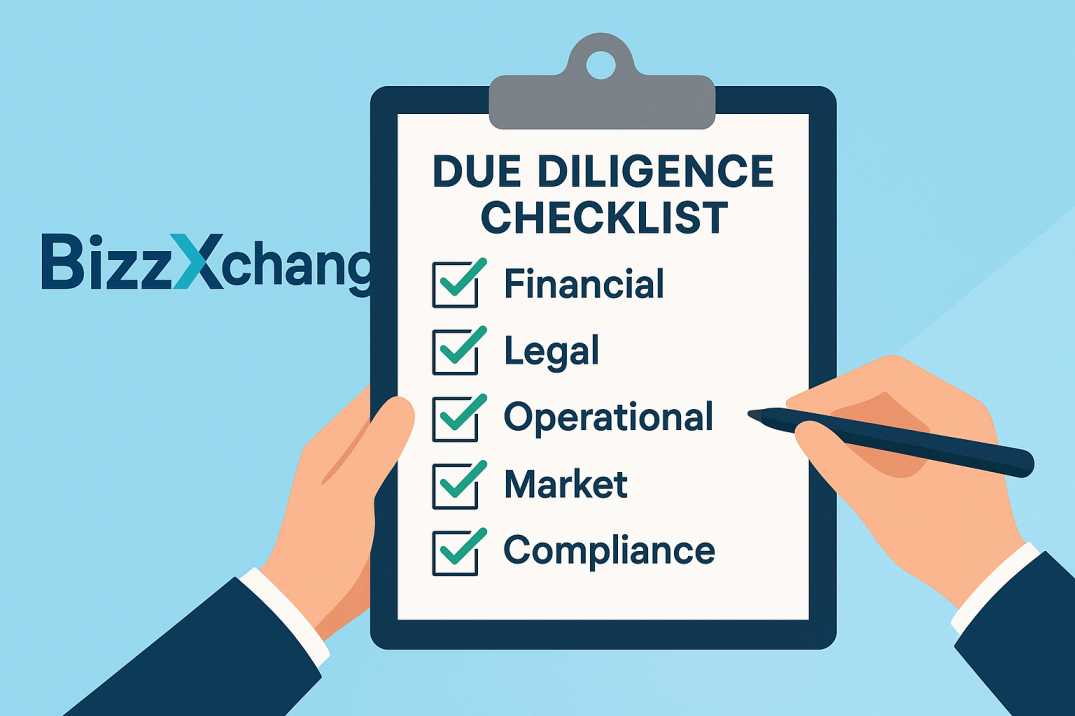
  • Due Diligence Checklist

    Due Diligence Checklist

    1. Financial Due Diligence

    • ✅ Review last 3–5 years audited financial statements (P&L, Balance Sheet, Cash Flow).
    • ✅ Check bank statements for consistency with reported revenues.
    • ✅ Verify outstanding debts, loans, and overdrafts.
    • ✅ Analyze tax returns filed and confirm there are no pending disputes.
    • ✅ Review accounts receivable (who owes money, how old are the dues).
    • ✅ Review accounts payable (suppliers/vendors waiting for payment).
    • ✅ Confirm value and condition of assets (machinery, land, inventory, vehicles).
    • ✅ Look at profit margins, sales trends, and seasonality.

    2. Legal Due Diligence

    • ✅ Verify business registration documents (Certificate of Incorporation, GST, PAN, TAN).
    • ✅ Check all licenses and permits are valid (industry-specific approvals).
    • ✅ Review MOA, AOA, partnership agreements, LLP deed (as applicable).
    • ✅ Check for ongoing or past litigation (labour disputes, consumer cases, supplier cases).
    • ✅ Verify intellectual property rights (patents, trademarks, copyrights).
    • ✅ Review rental/lease agreements of office, factory, or warehouse.
    • ✅ Ensure compliance with labour laws (PF, ESI, gratuity, bonus).

    3. Operational Due Diligence

    • ✅ Inspect machinery, IT systems, software, and equipment (age, efficiency, maintenance).
    • ✅ Review supplier and vendor contracts (terms, duration, dependence on few suppliers).
    • ✅ Check customer contracts (especially long-term or bulk buyers).
    • ✅ Assess inventory quality (no expired, obsolete, or damaged stock).
    • ✅ Review IT systems, ERP, or CRM software being used.
    • ✅ Analyze business processes (are they well-documented or founder-dependent?).

    4. Human Resource Due Diligence

    • ✅ Review list of employees, their designations, and salaries.
    • ✅ Check employment contracts and non-compete agreements.
    • ✅ Verify PF/ESI contributions and labour law compliance.
    • ✅ Understand dependency on key employees or the founder.
    • ✅ Identify pending dues (gratuity, bonus, incentives).

    5. Market & Strategic Due Diligence

    • ✅ Analyze industry trends (growing, stable, or declining).
    • ✅ Study competitor landscape (pricing, market share, threats).
    • ✅ Review customer concentration risk (is revenue dependent on 1–2 clients?).
    • ✅ Assess brand reputation and goodwill in the market.
    • ✅ Check distribution channels, sales partners, and online presence.
    • ✅ Evaluate growth potential & scalability of the business.

    6. Valuation & Deal Structure

    • ✅ Decide on valuation method (Asset-based, Income-based, or Market-based).
    • ✅ Check if asking price includes goodwill (and whether it’s justified).
    • ✅ Plan payment structure (lump sum, installments, or earn-out based on performance).
    • ✅ Negotiate warranties and indemnities (seller takes responsibility for hidden liabilities).
    • ✅ Finalize non-compete clause (seller cannot start same business immediately).

    ✅ Final Step: Professional Involvement

    Before closing the deal:

    • Hire a Chartered Accountant (CA) → for financial audit.
    • Hire a Lawyer → for legal compliance, contracts, and liabilities.
    • Hire an Industry Expert → for operational and market analysis.
  • How to sale or transfer the Trademark in india along with business?

    How to sale or transfer the Trademark in india along with business?

    Transfer of Trademark (TM) along with Business is Important aspect.

    To sell or transfer a trademark along with a business in India, you must draft a detailed Trademark Assignment Agreement outlining the transfer of ownership, then file Form TM-P with the Trademark Registry, submitting the agreement and other supporting documents within six months of the transfer date. The Registrar will review the application, may require you to publish the assignment, and finally registers the assignee as the new owner. 

    1. Draft a Trademark Assignment Agreement 

    • Create a Legally Binding Document:

    This agreement should clearly define the rights being transferred, the names of the assignor (current owner) and assignee (new owner), the trademark registration number, and the consideration (price or compensation).

    • Include Key Details:

    The agreement should also include the date of transfer, the scope of the transfer (complete or partial), and any other agreed-upon conditions.

    2. Gather Required Documents

    • Assignment Agreement:

    The signed Trademark Assignment Agreement is the primary document. 

    • Proof of Identity:

    Identification documents for both the assignor and assignee (e.g., PAN, Aadhaar, passport) are necessary. 

    • No Objection Certificate (NOC):

    A formal No Objection Certificate from the original owner (assignor) is required to confirm the transfer of rights. 

    • Power of Attorney (if applicable):

    If you are hiring a lawyer or agent to handle the process, you will need to provide a Power of Attorney. 

    Also Read | How fixed assets can be valued while takeover of business?

    3. File Form TM-P

    • Submit to the Trademark Registry: File Form TM-P with the Indian Trademark Office, either by the assignor, the assignee, or both. Legal team of BizzXchange helps in filing of TM-P. 
    • Pay the Fee: You must pay the required government fees for the trademark transfer. 

    4. Wait for Registrar’s Approval

    • Application Processing:

    The Trademark Registrar will review the application and documents submitted. 

    • Address Objections:

    The Registrar may raise objections, which must be addressed by the applicant within the specified timeframe. 

    • Advertisement:

    The Registrar may direct you to publish the assignment in the Trademark Journal. 

    • Final Registration:

    Once the Registrar is satisfied with the application and all requirements, the assignment will be approved, and the assignee will be registered as the new owner of the trademark. 

    5. Update Business Records 

    • Maintain Records: Ensure that all your legal and company records are updated to reflect the new trademark owner.
  • Can a unlisted company raise money via equity?

    Can a unlisted company raise money via equity?

    Yes — an unlisted company (i.e., not listed on a stock exchange) can raise more equity, but the process and options differ from a listed company.

    Here’s how it works:

    Ways an Unlisted Company Can Raise More Equity (i.e. Raising of money via Equity)

    1. Private Placement
      • Issue new shares to a select group of investors (e.g., high-net-worth individuals, private equity funds, venture capitalists, or strategic partners).
      • Requires board and shareholder approval.
      • Must comply with your jurisdiction’s corporate laws (e.g., Companies Act in India).
    2. Rights Issue
      • Offer existing shareholders the right to buy additional shares before offering them to others.
      • Maintains shareholder proportion if they participate.
    3. Employee Stock Option Plans (ESOPs)
      • Issue shares to employees as part of compensation or incentives.
      • Often used to attract and retain talent without immediate cash flow impact.
    4. Angel & Venture Capital Investment
      • Early-stage companies often raise equity from angel investors or venture capital firms.
      • These investors expect higher returns and usually negotiate significant influence or board seats.
    5. Private Equity
      • Suitable for more mature unlisted companies looking for large capital inflows for expansion, acquisitions, or restructuring.

    Key Considerations while deciding for Issue of Equity

    • Valuation: Needs to be agreed upon, often via negotiation rather than public market pricing.
    • Dilution: Issuing new shares reduces the percentage ownership of existing shareholders unless they participate.
    • Regulatory Compliance: Corporate law usually sets limits on the number of investors and the process for issuing shares.
    • Shareholder Agreements: Important to clearly define rights, responsibilities, and exit options for new investors.
    • BizzXchange helps you in raising of fund via Equity for your Startups and help in finding business investors or selling of business.