Category: sell business

  • How to Find Running Businesses for Sale in India

    How to Find Running Businesses for Sale in India

    Finding the right business to buy in India can be much easier when you know what to look for and where to search. Instead of starting a business from zero, many buyers prefer a running business for sale in India because it may already have customers, employees, suppliers, assets, revenue, and an established way of operating.

    But buying an existing business is a major decision. A business may look attractive from the outside, while its actual financial position, liabilities, customer base, rent, loans, or operating costs may tell a different story.

    So, how do you find a good running business for sale in India?

    The best approach is to first decide what type of business you want, set a realistic investment budget, search through business-for-sale listings, compare opportunities, check the financial information, and complete proper due diligence before making a final decision.

    What Is a Running Business?

    A running business is an existing business that is already operating rather than a business idea or a completely new startup.

    Depending on the opportunity, a running business may already have:

    • Existing customers
    • Regular sales or revenue
    • Employees and staff
    • Business equipment and assets
    • Supplier relationships
    • A physical location
    • Existing licenses or registrations
    • A website or online presence
    • Established business processes
    • Historical financial records

    The exact situation is different for every business. Some owners may want to sell the entire business, while others may be looking for a buyer for a particular percentage of ownership.

    This is why buyers should not judge an opportunity only by its asking price.

    Why Do People Look for Running Businesses for Sale in India?

    Starting a new business takes time. You have to find customers, establish suppliers, hire people, build processes and create awareness in the market.

    Buying an existing business can provide a different starting point.

    For example, an established business may already have a customer base and operating history. This gives a buyer information that is normally unavailable when starting a new venture.

    A buyer can review previous turnover, profitability, assets, expenses and other available information before deciding whether the opportunity makes sense.

    However, buying an existing business does not mean there is no risk. A running business can also have outstanding loans, legal matters, declining sales, customer dependency, high operating costs or other problems.

    The goal is not simply to find a business for sale. The goal is to find a running business that matches your budget, experience and investment objectives.

    How to Find Running Businesses for Sale in India

    1. Decide What Type of Business You Want

    Start with the business category you understand or are willing to learn.

    Running businesses are available across many industries, including:

    • Manufacturing
    • Hospitality
    • Restaurants and food businesses
    • Retail
    • Education
    • Healthcare
    • IT and technology
    • Garments and textiles
    • Beauty and personal care
    • Logistics and transportation
    • Rental businesses
    • Service businesses
    • Agriculture-related businesses

    You do not necessarily need to restrict yourself to one industry, but having a clear preference makes your search much easier.

    For example, if you have experience managing a retail operation, buying an established retail business may be more practical than purchasing a manufacturing unit that requires completely different knowledge and processes.

    2. Set Your Investment Budget

    Before searching for a business for sale, decide how much you are actually comfortable investing.

    Your budget should include more than the seller’s asking price.

    Consider additional costs such as:

    • Legal and professional fees
    • Business valuation
    • Due diligence
    • Working capital
    • Inventory
    • Employee-related expenses
    • Rent or property-related costs
    • Equipment maintenance
    • Taxes and transaction-related expenses
    • Immediate improvements after takeover

    For example, if you have a budget of ₹50 lakh, it may not be sensible to use the entire amount to purchase the business and leave nothing available for working capital.

    A financially comfortable acquisition gives you more room to manage the business after the takeover.

    3. Search Online Business-for-Sale Listings

    One of the easiest ways to find a running business for sale in India is to search online business opportunity platforms.

    A platform such as BizzXchange allows buyers to explore business opportunities using filters such as company name, business nature, industry and established year. Buyers can review available opportunities and contact sellers or express interest in suitable businesses.

    You can explore current business opportunities on BizzXchange and narrow your search according to the type of business and investment you are looking for.

    Online listings are useful because they allow you to compare different opportunities instead of depending on a single source.

    4. Compare Asking Price With Business Performance

    Do not assume that a lower asking price automatically means a better deal.

    Look at the numbers behind the business.

    Some important figures to review include:

    • Latest turnover
    • Previous turnover
    • EBITDA or operating profit
    • Profit margin
    • Assets
    • Liabilities
    • Outstanding loans
    • Working capital requirements
    • Inventory value
    • Monthly operating expenses

    For example, two businesses may both be available for ₹1 crore, but one may have stable revenue and healthy profits while the other may have declining sales and significant liabilities.

    The asking price is only one part of the acquisition decision.

    5. Check How Long the Business Has Been Operating

    The age of a business can provide useful context.

    A business that has operated for several years may have a longer financial and operational history that a buyer can review.

    But business age alone should never be treated as proof that an opportunity is good.

    A five-year-old business with declining revenue may be less attractive than a newer business with strong growth and healthy financials.

    Look at the business history together with its current performance.

    6. Understand Why the Owner Is Selling

    This is one of the most important questions to ask.

    There can be many genuine reasons for selling a running business, such as:

    • Relocation
    • Retirement
    • Partnership changes
    • Personal reasons
    • Need for capital
    • Moving into another business
    • Lack of time to manage the business
    • Expansion into another opportunity

    However, buyers should still verify the information independently.

    Ask questions about recent sales, customers, employees, suppliers, profitability and any major changes in the business.

    A seller’s explanation should be considered along with the financial and legal records.

    What Should You Check Before Buying a Running Business?

    Finding a business is only the first step. Before making an offer or paying money, conduct proper due diligence.

    Financial Records

    Ask for relevant financial information and compare the figures over multiple periods.

    Look for:

    • Revenue trends
    • Profitability
    • Expenses
    • Bank transactions
    • Tax records
    • Outstanding payments
    • Loans and liabilities
    • Accounts receivable
    • Accounts payable

    Do not rely only on figures shown in an online listing.

    Legal Documents

    Check the legal status of the business and identify whether there are any pending disputes, liabilities or compliance issues.

    Depending on the type of business, documents may include:

    • Business registration documents
    • Tax registrations
    • Licenses
    • Agreements
    • Lease documents
    • Ownership records
    • Contracts
    • Regulatory approvals

    Professional legal and financial advice can be valuable during this stage.

    Customers and Revenue

    A business with high revenue is not automatically a good acquisition.

    Ask where the revenue comes from.

    If most of the revenue comes from one customer, the business could face a major problem if that customer leaves.

    Also check whether revenue has been increasing, decreasing or remaining stable.

    Employees and Operations

    Understand who actually runs the business.

    Ask:

    • How many employees are there?
    • Which employees are essential?
    • What are the salary costs?
    • Are employees likely to remain after the takeover?
    • Are there operational processes already documented?
    • How dependent is the business on the current owner?

    If the business stops functioning when the owner leaves, the buyer needs to understand that risk before completing the acquisition.

    Assets and Inventory

    If the business includes machinery, equipment, vehicles, furniture, stock or other assets, verify their condition and ownership.

    Do not assume that every asset shown by the seller is included in the final transaction.

    The purchase agreement should clearly state what is being transferred.

    How Much Does a Running Business Cost in India?

    There is no fixed price for a running business in India.

    The value can depend on factors such as:

    • Industry
    • Location
    • Revenue
    • Profitability
    • Assets
    • Brand value
    • Customer base
    • Growth potential
    • Business age
    • Existing liabilities
    • Property or rental arrangements
    • Market conditions

    A small service business may be available for a relatively modest investment, while an established manufacturing unit, hotel, healthcare business or large commercial operation may require several crores.

    This is why buyers should compare the business value with its actual financial performance, rather than choosing an opportunity only because it appears inexpensive.

    Should You Buy a Running Business or Start a New Business?

    Both options have advantages and disadvantages.

    With a new business, you have more freedom to build the company from the beginning, but you also have to establish customers, processes and market presence.

    With a running business, some of those elements may already exist.

    Buying a Running Business

    Potential advantages include:

    • Existing customers
    • Existing revenue
    • Established operations
    • Existing employees
    • Historical financial information
    • Existing suppliers
    • Faster entry into the market

    Potential risks include:

    • Existing liabilities
    • Old business problems
    • Customer concentration
    • Declining revenue
    • Employee dependency
    • Higher purchase cost

    Starting a New Business

    Potential advantages include:

    • Complete control over the business model
    • Ability to build your own brand
    • Freedom to select location and processes
    • No previous business liabilities

    Potential challenges include:

    • No established customer base
    • Higher initial uncertainty
    • Time required to build sales
    • Marketing and branding costs
    • Difficulty predicting early revenue

    The right choice depends on your experience, capital, risk tolerance and business goals.

    How to Find the Right Business for Your Location

    Location can make a major difference to a business.

    If you want to buy a running business in Jaipur, Delhi, Mumbai, Bengaluru, Pune, Ahmedabad or another Indian city, search specifically for opportunities in that location.

    You can also consider nearby areas if the business can be managed remotely or expanded to another location.

    For a physical business, check:

    • Local customer demand
    • Competition
    • Rent
    • Accessibility
    • Parking
    • Nearby businesses
    • Local regulations
    • Future development of the area

    For online or technology businesses, location may be less important, but customer geography, employee availability and operating costs can still matter.

    Where Can You Start Looking for Running Businesses for Sale in India?

    If you are actively searching for a running business for sale in India, start by defining your preferred industry, location and investment range.

    Then compare available business opportunities based on financial performance, asking price, ownership structure, business age, assets and other relevant details.

    BizzXchange provides a platform where buyers can search and explore business opportunities and connect with interested sellers. The platform includes businesses across different industries and locations, with listing information such as asking amount, equity for sale, turnover and other business details where available.

    View available business opportunities

  • How to calculate Goodwill value while acquaring a business?

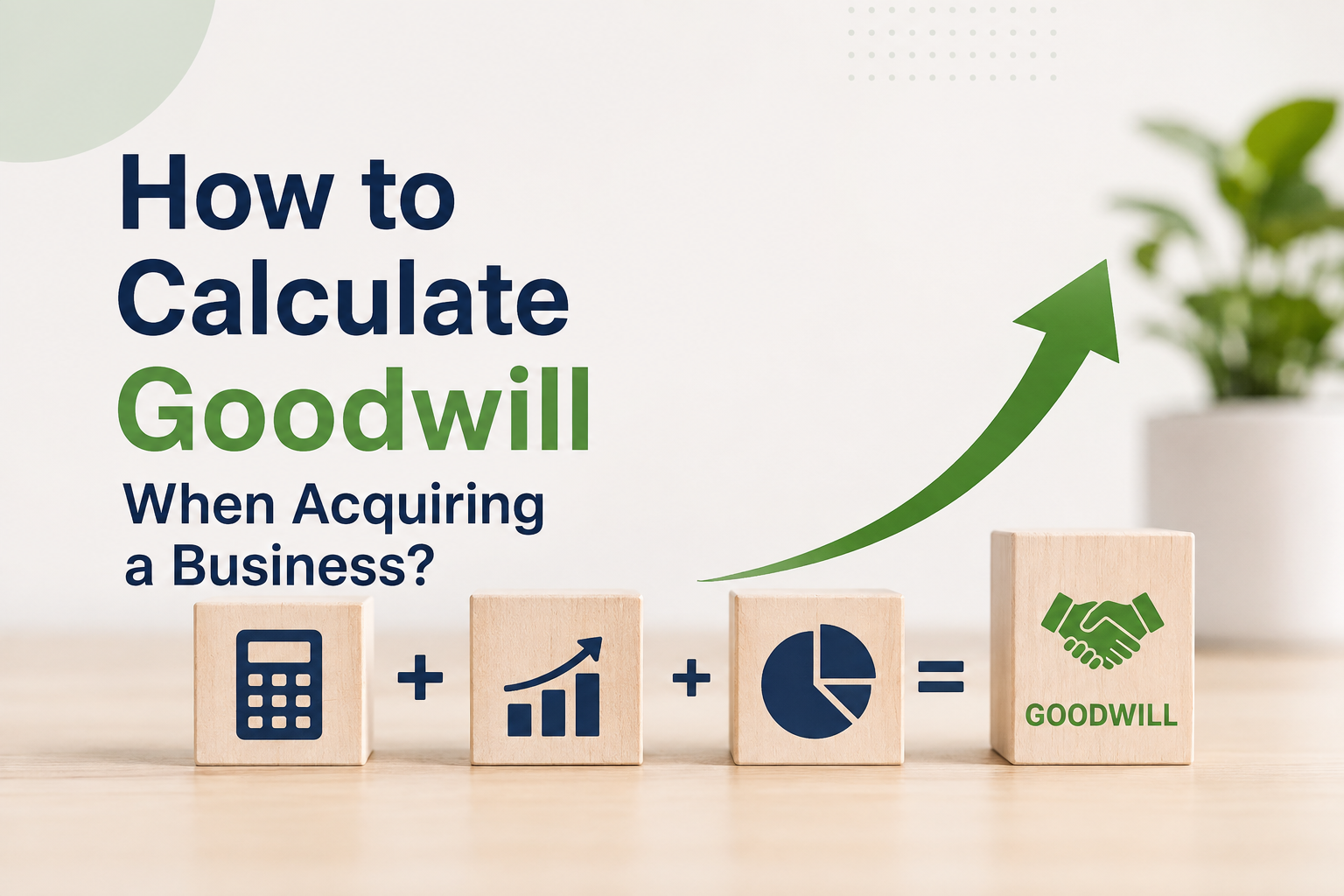
    How to calculate Goodwill value while acquaring a business?

    When acquiring a business, goodwill is basically the extra amount you pay above the fair value of its identifiable assets. It reflects things like brand reputation, customer loyalty, and future earning potential.

    Core idea

    Goodwill = Purchase Price – Net Identifiable Assets

    Here’s the formula clearly:

    Goodwill=Purchase Price−(Fair Value of Assets−Fair Value of Liabilities)\text{Goodwill} = \text{Purchase Price} – (\text{Fair Value of Assets} – \text{Fair Value of Liabilities})Goodwill=Purchase Price−(Fair Value of Assets−Fair Value of Liabilities)

    Step-by-step method

    1. Determine Purchase Price

    This is the total amount you pay to acquire the business (cash, shares, etc.).

    2. Find Fair Value of Assets

    Include:

    • Tangible assets (land, machinery, inventory)
    • Identifiable intangible assets (patents, trademarks)

    3. Subtract Liabilities

    Include:

    • Loans
    • Payables
    • Any obligations

    Net Identifiable Assets = Assets – Liabilities

    4. Calculate Goodwill

    Subtract net assets from purchase price.

    Example

    Suppose:

    • Purchase price = ₹50 lakh
    • Fair value of assets = ₹40 lakh
    • Liabilities = ₹10 lakh

    Net assets = ₹40L – ₹10L = ₹30L

    Goodwill = ₹50L – ₹30L = ₹20 lakh

    That ₹20 lakh is goodwill.

    Alternative methods (used in valuation)

    Sometimes goodwill is estimated before acquisition using:

    1. Average Profit Method

    Goodwill = Average Profit × Number of Years Purchase

    2. Super Profit Method

    Goodwill = Super Profit × Years Purchase

    • Super Profit = Actual Profit – Normal Profit

    3. Capitalization Method

    Based on expected return on investment.

  • Why Confidentiality is Critical When Selling a Business in India

    Why Confidentiality is Critical When Selling a Business in India

    Selling a business is one of the most significant decisions an entrepreneur can make. While many business owners focus on valuation, negotiations, and finding buyers, one factor is often overlooked: confidentiality.

    A breach of confidentiality during the sale process can impact employees, customers, suppliers, and even the value of the business itself. This is why experienced business owners and investors prioritize confidential business sales.

    The Risks of a Public Business Sale:- When news of a business sale becomes public too early, several challenges may arise:

    Employee Uncertainty:-Employees may become concerned about job security, leading to reduced productivity or the loss of key staff members.

    Customer Concerns:-Customers may worry about changes in service quality, pricing, or business continuity.

    Supplier Reactions:-Suppliers may reconsider credit terms or future business arrangements if they perceive uncertainty.

    Competitor Advantage:-Competitors can use the information to target customers, employees, or market share.

    These factors can negatively affect business performance during the sale process and reduce the final selling price.

    How to Maintain Confidentiality During a Business Sale

    Share Information Gradually:-Business owners should provide detailed information only to serious and qualified buyers.

    Use Non-Disclosure Agreements (NDAs):-An NDA helps protect sensitive financial, operational, and customer information from being disclosed or misused.

    Screen Potential Buyers:-Not every inquiry is from a genuine buyer. Proper screening helps identify serious investors and acquisition candidates.

    Avoid Public Disclosure:-Sensitive details such as customer lists, financial data, and proprietary processes should remain confidential until advanced stages of negotiation.

    Why Online Business Marketplaces Are Growing:-Modern business marketplaces allow owners to showcase opportunities while maintaining privacy.

    Through platforms such as BizzXchange, sellers can connect with potential buyers and investors without publicly revealing confidential information. This helps generate interest while protecting the business’s operations and reputation.

    Industries Where Confidential Sales Matter Most

    Confidentiality is particularly important for:

    *Hospitals and Nursing Homes

    *Manufacturing Units

    *Restaurants and Cafes

    *Educational Institutions

    *Technology Companies

    *Retail Businesses

    *Service-Based Businesses

    In these sectors, customer confidence and employee retention directly affect business value.

    Benefits of a Confidential Business Sale

    A well-managed confidential sale process can help:

    ✔ Preserve business value

    ✔ Protect customer relationships

    ✔ Retain employees

    ✔ Avoid market speculation

    ✔ Attract serious buyers

    ✔ Ensure smoother negotiations

    So Finally we can say

    A successful business sale is not just about finding a buyer—it is about protecting the value you have built over the years. Maintaining confidentiality throughout the process can make a significant difference in achieving the best outcome.

    Business owners considering a sale can explore acquisition opportunities, investor connections, and confidential listings through BizzXchange – India’s Business Buying & Selling Platform.

    Confidential Business Sale India, Sell Business Confidentially, Business Acquisition India, Business Buyers India, Business Marketplace India, Business Valuation India, Business Exit Strategy, Buy and Sell Business India, Investor Network India, BizzXchange, BizzExchange.

  • What will be the responsibility of the Previous owner after the sale or transfer of the business?

    What will be the responsibility of the Previous owner after the sale or transfer of the business?

    The responsibility of the old owner after sale/transfer of a business or company depends on the type of business structure and the terms of the agreement, but here’s a clear and practical breakdown:

    1. General Principle

    Once a business is sold or transferred, the new owner takes over future liabilities, but the old owner is still responsible for past obligations unless specifically transferred.

    2. Key Responsibilities of Old Owner

    A. Past Liabilities (Before Transfer)

    The old owner remains liable for:

    • Outstanding tax dues (GST, Income Tax, etc.)
    • Existing loans or debts
    • Pending legal cases or disputes
    • Unpaid employee salaries or statutory dues (PF, ESI)

    Unless the agreement clearly states that the buyer will take over these. 

    B. Misrepresentation / Fraud

    If the old owner:

    • Hides important information
    • Gives false financials
    • Conceals liabilities

    Then they can be legally liable even after the sale. 

    C. Contractual Obligations

    Responsibilities depend on the Sale Agreement / Business Transfer Agreement (BTA):

    • Indemnity clauses (old owner compensates buyer if hidden issues arise)
    • Non-compete clause (old owner cannot start similar business for a period)
    • Transition support (help in handover) 

    D. Personal Guarantees

    If the old owner has given:

    • Personal guarantee for loans or leases

    They may still be liable unless the lender releases them officially. 

    3. Based on Business Type

    Company (Private Limited / OPC)

    • Company is a separate legal entity
    • Liabilities stay with the company, not the owner
    • Old shareholder/director is generally not liable after exit, except:
      • -Fraud
      • -Personal guarantees
      • -Non-compliance during their tenure 

    Partnership Firm / Proprietorship

    • Old owner/partner remains liable for:
      • All dues up to the date of transfer
    • In partnerships, public notice of change is important to limit liability 

    4. Tax Responsibilities

    GST (under Central Board of Indirect Taxes and Customs)

    • Old owner liable for GST dues till transfer date
    • GST registration should be:
      • Cancelled or amended properly 

    Income Tax (under Income Tax Department of India)

    • Old owner must:
      • File returns up to date of transfer
      • Clear past tax liabilities 

    5. How to Protect Old Owner (Very Important)

    • Draft a strong Business Transfer Agreement (BTA)
    • Include:
      • Indemnity clause
      • Liability cutoff date
      • Clear asset & liability transfer list
    • Take:
      • NOC from lenders
      • Proper tax clearance
    • Issue:
      • Public notice (for partnership) 

    6. Simple Summary

    Old owner is responsible for:

    • Past liabilities
    • Hidden issues or fraud
    • Personal guarantees

    Not responsible for:

    • Future business actions (after proper transfer)
  • Benefit of running business acquisition or takeover or takeover?

    Benefit of running business acquisition or takeover or takeover?

    Running a business through acquisition (buying an existing business instead of starting from scratch) can be powerful—but only if done thoughtfully. Here are the real benefits, without the hype:

    1. Immediate Cash Flow

    Unlike a startup, an acquired business usually already has:

    *Customers

    *Revenue stream

    *Supplier network

    So you start earning from day one (if the business is healthy).

    2. Established Brand & Reputation

    You’re not building trust from zero. The business already has:

    *Market recognition

    *Customer loyalty

    *Possibly goodwill value

    That saves years of marketing effort.

    3. Lower Startup Risk (but not zero)

    Startups fail at high rates. With acquisition:

    *Business model is already tested

    *Financial history is available

    *You can analyze past performance before buying

    But don’t assume it’s “safe”—many businesses are sold because of hidden problems.

    4. Faster Growth

    Instead of building slowly, you can:

    *Expand an existing operation

    *Add new products/services quickly

    *Enter new markets instantly

    This is especially useful if you already run another business.

    5. Easier Financing

    Banks and investors are more comfortable funding:

    *A running business with financial records

    vs

    *A completely new idea

    This increases your chances of getting loans or investors.

    6. Existing Team & Systems

    You get:

    *Experienced employees

    *Operational processes

    *Vendor relationships

    This reduces the initial management burden.

    7. Synergy Benefits (if you already have a business)

    If you already run a business, acquisition can:

    *Reduce costs (shared resources)

    *Increase sales (cross-selling)

    *Strengthen market position

    8. Asset Value

    Sometimes you’re not just buying profits—you’re buying:

    *Land/building

    *Machinery

    *Licenses

    *Contracts

    These can have independent value.

    ⚠️ Important Reality Check

    Acquisition is not always better than starting fresh. Common risks:

    *Hidden liabilities (tax, legal, debt)

    *Declining business disguised as profitable

    *Overpaying due to wrong goodwill calculation

    *Cultural issues with existing staff

    ✔️ When Acquisition Makes the Most Sense

    It works best when:

    *The business has stable profits (not declining)

    *You understand the industry

    *You can improve operations or expand

    *You buy at a fair valuation (not emotional price)

  • How to deal while purchasing an exisiting business?

    How to deal while purchasing an exisiting business?

    When purchasing an existing business, proper planning and verification are very important. A wrong deal can create legal or financial problems later. Here are the key steps to follow while dealing with an existing business purchase. 

    1. Understand the Reason for Sale

    Always ask the seller why they want to sell the business.

    *Common reasons may include:

    *Retirement

    *Financial problems

    *Partnership disputes

    *Declining business

    This helps you understand the real condition of the business.

    2. Conduct Proper Due Diligence

    Due diligence means checking all important documents before buying. Verify:

    *Financial statements (last 3–5 years)

    *Income tax returns

    *GST returns

    *Bank statements

    *Outstanding loans or liabilities

    *Pending legal cases

    This ensures the business has no hidden liabilities.

    3. Check Business Licenses and Registrations 

    Make sure all licenses are valid and transferable such as:

    *GST Registration

    *Trade license

    *Shop & Establishment registration

    *Industry-specific licenses

    *Confirm whether these can be transferred to the new owner.

    4. Review Assets and Inventory 

    Verify the actual value of business assets such as:

    *Machinery

    *Furniture

    *Stock / inventory

    *Vehicles

    *Office equipment

    Sometimes sellers overvalue assets, so physical verification is important.

    5. Check Customer Base and Market Reputation 

    Understand:

    Who are the main customers

    Supplier relationships

    Online reviews and brand reputation

    Competitors in the market

    A strong customer base and reputation increases business value.

    6. Evaluate Business Valuation

    Determine if the price asked by the seller is fair.

    Common valuation methods include:

    Profit multiple method

    *Asset valuation

    *Revenue-based valuation

    Taking help from a CA or financial advisor is advisable.

    7. Review Contracts and Agreements

    Check existing contracts such as:

    Lease agreement of premises

    Supplier contracts

    Employee contracts

    Franchise agreements (if any)

    Ensure these agreements will continue after ownership transfer.

    8. Structure the Deal Properly 

    Decide the structure of the transaction:

    Asset purchase (buy only assets)

    Share purchase (buy the company shares)

    Asset purchase is often safer because it avoids hidden liabilities.

    9. Prepare a Legal Agreement 

    Draft a detailed Business Transfer Agreement covering:

    Purchase price

    Assets included

    Liabilities

    Non-compete clause

    Payment terms

    Always get it reviewed by a legal expert or CA.

    10. Plan Transition and Handover 

    Ensure the seller supports the transition for some time, such as:

    Introducing customers

    Explaining operations

    Training employees

    This makes the business continuity smoother.

  • Can a proprietorship business also be takeover or purchase?

    Can a proprietorship business also be takeover or purchase?

    Yes  — a proprietorship business can also be taken over or purchased, but the process is a little different compared to a company or LLP because:

    Important Points about Proprietorship business Takeover:

    • No Separate Legal Entity
      A proprietorship and its owner are the same person in the eyes of law. So, you cannot buy the “proprietorship” itself, but you can buy its assets, goodwill, brand name, licenses, and customer base.
    • Assets & Liabilities Transfer
      • Assets like land, machinery, stock, intellectual property, licenses, contracts, etc. can be transferred through proper agreements.
      • Liabilities (loans, dues, creditors) do not automatically transfer — they need consent of lenders/creditors or a fresh agreement.
    • Goodwill & Brand
      If the business has a strong brand name or goodwill, that can also be purchased along with the business.
    • GST / Other Registrations
      Since registrations (like GST, MSME, Shops & Establishment) are in the name of the proprietor, the buyer has to take fresh registrations in their own name after takeover.
    • Agreement of Sale
      The transfer is usually done through an Asset Purchase Agreement / Business Transfer Agreement, where it is clearly mentioned what is being transferred — assets, stock, goodwill, customer list, contracts, etc.

  • How capital gain shall be calculated in case of slump sale of business as a whole?

    How capital gain shall be calculated in case of slump sale of business as a whole?

    In case of a slump sale of business (i.e sale with full assets and liabilities), capital gains are calculated under a special mechanism given in Section 50B of the Income Tax Act, 1961.

    1. What is a Slump Sale?

    • Defined in Section 2(42C):

    “Slump sale means transfer of one or more undertakings as a result of the sale for a lump sum consideration without values being assigned to individual assets and liabilities.”

    👉 Key features:

    • Entire undertaking is transferred (business on going-concern basis).
    • Sale consideration is lump-sum.
    • No separate valuation is attached to assets/liabilities in the agreement.
    • Transfer may be of entire business or one of the units/divisions.

    2. Tax Treatment

    • Section 50B is the special provision for computation of capital gains in slump sale.
    • The “undertaking” itself is treated as a capital asset.
    • Type of gain depends on period of holding of undertaking (not of individual assets):
      • Held > 36 months → Long Term Capital Gain (LTCG)
      • Held ≤ 36 months → Short Term Capital Gain (STCG)

    ⚠️ Note: Even if individual assets include stock-in-trade or short-term assets, period of holding of undertaking decides tax treatment.

    BizzXchange helps in slump sale tax treatment

    3. Computation of Capital Gain (Sec 50B)

    Formula: Capital Gain = Full Value of Consideration – Net Worth of Undertaking

    (a) Full Value of Consideration

    • Lump sum sale price as per agreement.
    • From A.Y. 2021-22 onwards → As per Sec 50B(2A), if sale consideration is less than Fair Market Value (FMV) of undertaking (calculated as per Rule 11UAE), then FMV is deemed consideration.

    (b) Net Worth (Explanation 1 to Sec 50B)

    Net Worth = Aggregate Value of Assets – Liabilities

    1. Assets Valuation
      • Depreciable assets → Written Down Value (WDV) as per Income Tax Act (Sec 43(6)(c)).
      • Non-depreciable assets (like land) → Book Value as per balance sheet.
      • Other assets (like current assets, investments) → Book Value.
      • Revaluation → ignored (not included).
    2. Liabilities
      • Taken as per books of account (book value).

    (c) Special Points

    • No indexation benefit available for Net Worth.
    • Net worth once calculated is deemed cost of acquisition & improvement (Explanation 2 to Sec 50B).
    • Slump sale loss (if consideration < net worth) → Allowed to set-off as per normal capital gain rules.

    4. Example

    Suppose XYZ Ltd sells one of its divisions as slump sale:

    • Lump sum consideration = ₹15 crore
    • Assets & Liabilities in Books:
      • Depreciable Assets (WDV) = ₹6 crore
      • Land (Book Value) = ₹2 crore
      • Current Assets = ₹4 crore
      • Liabilities = ₹3 crore

    👉 Net Worth = (6 + 2 + 4) – 3 = ₹9 crore

    Capital Gain = 15 – 9 = ₹6 crore

    If held for > 36 months → LTCG.
    If ≤ 36 months → STCG.

    5. Important Points

    • No indexation benefit is available for slump sale.
    • Form 3CEA (CA certificate) is required to certify computation of Net Worth.
    • If slump exchange (consideration not in money but shares, etc.) → Not covered under 50B, other provisions may apply.

    BizzXchange at any stage of Slump sale helps the business.

  • What is due diligence in takeover of company?

    What is due diligence in takeover of company?

    what is due diligence in takeover of company?

    Due diligence is a critical analysis of all aspects of the takeover to justify the purchase cost. It is generally made by buyer and their professional. It determines and confirms the accuracy of information provided by the seller and to identify the risk, reward and other threats and opportunities. A perfect process helps the buyer to make a right decision, fair market value and identify the hidden aspects and cost.

    Key purposes of due diligence

    *Price determination: Due diligence help is price determination with deeply analysis.

    *Risk identification: Due diligence also help in risk identification associated with takeover of the company or business.

    Efficient decision making: It also help in fast and efficient decision making.

    *Negotiation leverage:  Any issues uncovered during the process can be used as leverage to negotiate more favourable terms in the purchase agreement, such as a lower price or specific indemnities.

    *Future planning : It provide a proper road map to run the business after takeover as internal issues, risk and opportunities being identified in this.

    Process and aspects of due diligence:

    *Legal Aspects-Litigation on and by the company etc.

    *Taxation and Financial Aspects- Analise the whole legal aspect of the company for example Taxation, MCA matter, GST Matter, Cash Flow, Fund Flow, Debt structuring etc.

    *Market Aspects-for example Customer demand, Customer base, Growth aspect, Company market position

    *Environmental Aspects- for example what measures taken to avoid environment pollution by company

    *Operational aspects- for example Company Day to day operation, supply chain, production, technologies etc. 

    Also, many critical aspects of company can be covered by the buyer.

    Due Diligence Team

    It is the core team responsible for carrying out the due diligence and may consist of the following personnel:

    *Legal team of the buyer – BizzXchange helping also helping as part of legal team

    *Valuation advisor of the buyer- BizzXchange helping also helping as part of valuation advisors

    *Merchant Bankers/Chartered Accountants of the buyer- BizzXchangehelping also helping in providing the suitable CA and Marchant Banker

    *Management representative of the buyer

    *Technical consultants of the buyer

  • How to sell your Business

    How to sell your Business

    How to sale running business in some easy steps for you understanding

    Selling your business as a whole (also called a business exit or full business sale or sell running business online or sell my business) involves various steps to maximize value, minimize risk, and ensure legal and financial compliance.

    Here’s a practical step-by-step guide:

    ✅ 1. Prepare Your Business for Sale Before approaching buyers, make your business as attractive as possible.

              Key Actions:.

              • Organize Financials: Have 3–5 years of clean financial statements (P&L, balance sheet, tax returns). .

              • Settle Legal/Compliance Issues: Resolve disputes, update licenses, review contracts..

              • Document Operations: SOPs, employee roles, supplier/customer agreements..

              • Optimize Profitability: Cut inefficiencies, show stable or growing revenue..

              • Value Your Business: Get a business valuation (use a broker or valuation expert).

              • Competitors .

    ✅ 2. Decide How to Sell You have a few options: Option Description Broker A business broker helps find buyers and manages the sale online (good for small to mid-sized businesses). M&A Advisor Better for larger companies. Sell Direct You find a buyer yourself (e.g., employee, competitor, investor). Marketplace List on platforms like BizzXchange. 

    ✅ 3. Find a Buyer Market your business confidentially to avoid disrupting operations. Potential Buyers:

              • Competitors

              • Investors (private equity, VC)

              • Employees (via ESOP or management buyout)

              • Individuals (entrepreneurs)

              • Strategic buyers (companies seeking growth or synergy)

    ✅ 4. Negotiate and Structure the Deal This includes terms like price, payment structure, and transition period.

             Common Deal Structures:

             • Asset Sale: Buyer buys specific assets/liabilities.

             • Stock Sale: Buyer purchases all company shares (common in corporations).

             • Earnout: Part of the payment depends on future performance. Involve professionals:

             • Chartered Accountant

             • Business broker or M&A advisor

             • Business attorney

    ✅ 5. Due Diligence The buyer and or his consultant will inspect financials, operations, legal issues, etc. Be transparent and responsive.

    ✅ 6. Finalize Legal Documents Work with an attorney to draft and review:

             • Purchase Agreement

             • Non-compete agreements

             • Transition agreements (if you’ll stay on temporarily)

             • Asset/stock transfer documents, BizzXchange help in executing the finalise legal documents

    ✅ 7. Close the Deal Sign documents, transfer ownership, and receive payment. Inform stakeholders (staff, customers, vendors) as appropriate.

    ✅ 8. Transition and Exit Assist the buyer in taking over smoothly — you may stay for a transition period (30–180 days).