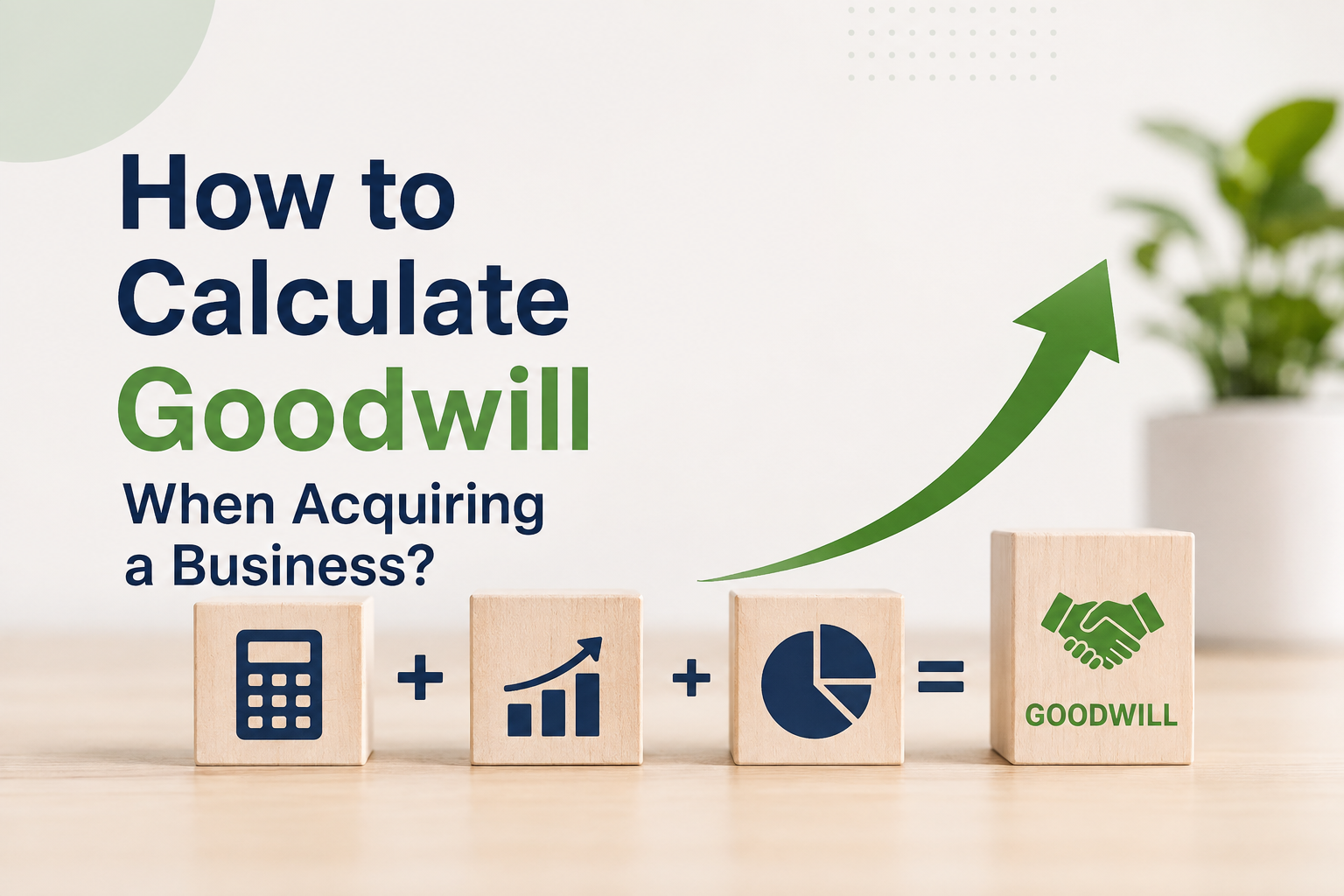
When acquiring a business, goodwill is basically the extra amount you pay above the fair value of its identifiable assets. It reflects things like brand reputation, customer loyalty, and future earning potential.
Core idea
Goodwill = Purchase Price – Net Identifiable Assets
Here’s the formula clearly:
\text{Goodwill} = \text{Purchase Price} – (\text{Fair Value of Assets} – \text{Fair Value of Liabilities})Goodwill=Purchase Price−(Fair Value of Assets−Fair Value of Liabilities)
Step-by-step method
1. Determine Purchase Price
This is the total amount you pay to acquire the business (cash, shares, etc.).
2. Find Fair Value of Assets
Include:
- Tangible assets (land, machinery, inventory)
- Identifiable intangible assets (patents, trademarks)
3. Subtract Liabilities
Include:
- Loans
- Payables
- Any obligations
Net Identifiable Assets = Assets – Liabilities
4. Calculate Goodwill
Subtract net assets from purchase price.
Example
Suppose:
- Purchase price = ₹50 lakh
- Fair value of assets = ₹40 lakh
- Liabilities = ₹10 lakh
Net assets = ₹40L – ₹10L = ₹30L
Goodwill = ₹50L – ₹30L = ₹20 lakh
That ₹20 lakh is goodwill.
Alternative methods (used in valuation)
Sometimes goodwill is estimated before acquisition using:
1. Average Profit Method
Goodwill = Average Profit × Number of Years Purchase
2. Super Profit Method
Goodwill = Super Profit × Years Purchase
- Super Profit = Actual Profit – Normal Profit
3. Capitalization Method
Based on expected return on investment.
Leave a Reply