Author: admin

  • Financial Ratios to Analyse Before Buying a Business

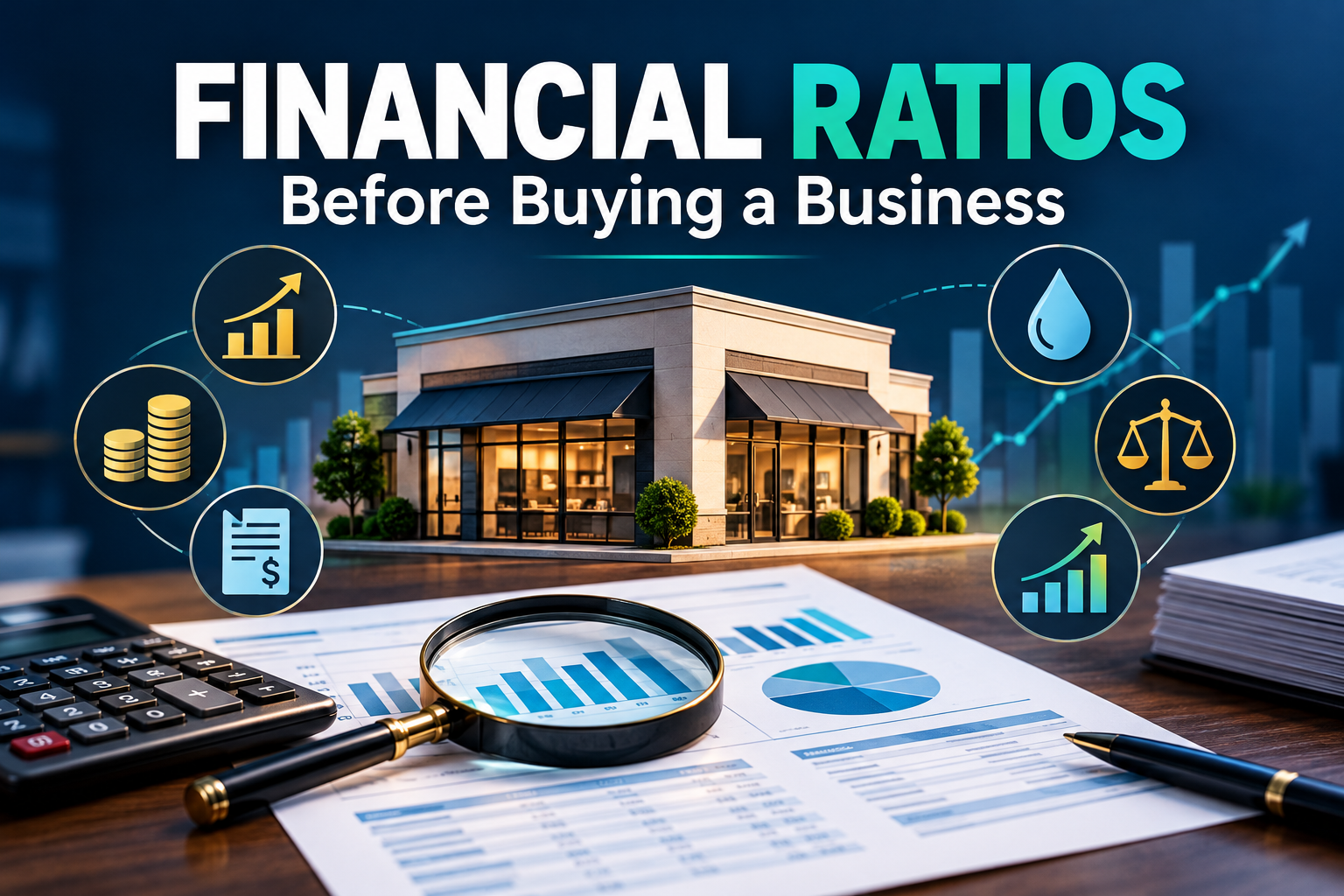
    Financial Ratios to Analyse Before Buying a Business

    Buying an existing business can be a great investment — but before making a decision, you must evaluate its financial health, profitability, debt position and ability to generate cash.

    A business with high sales is not necessarily a profitable business. The real question is: How much profit does it generate, how much cash does it earn, and what risks are you taking over?

    Here are the key financial ratios every buyer should analyse before acquiring a running business.

    1. Profitability Ratios

    These ratios help you understand how much profit a business earns from its sales and investment.

    1. Gross Profit Margin (GPM)

    Gross ProfitNet Sales×100\frac{\text{Gross Profit}}{\text{Net Sales}}\times100Net SalesGross Profit×100

    Measures the profit remaining after deducting the direct cost of goods sold.

    Example: Sales ₹1 crore and gross profit ₹30 lakh = 30% GPM.

    A higher or improving margin generally indicates better pricing power or cost control.

    2. Net Profit Margin (NPM)

    Net ProfitNet Sales×100\frac{\text{Net Profit}}{\text{Net Sales}}\times100Net SalesNet Profit×100

    Shows how much profit the business retains after expenses, interest and taxes.

    Example: Net profit ₹8 lakh on sales of ₹1 crore = 8% NPM.

    A low or declining margin may indicate rising costs, excessive overheads or weak pricing.

    3. EBITDA Margin

    EBITDANet Sales×100\frac{\text{EBITDA}}{\text{Net Sales}}\times100Net SalesEBITDA×100

    Measures operating profitability before interest, taxes, depreciation and amortisation.

    Example: EBITDA ₹15 lakh on sales of ₹1 crore = 15% EBITDA margin.

    Useful for comparing businesses with different financing and depreciation structures.

    2. Liquidity Ratios

    These ratios indicate whether the business can pay its short-term obligations.

    4. Current Ratio

    Current AssetsCurrent Liabilities\frac{\text{Current Assets}}{\text{Current Liabilities}}Current LiabilitiesCurrent Assets

    Measures the ability to meet short-term liabilities using short-term assets.

    Example: Current assets ₹40 lakh and current liabilities ₹20 lakh = 2:1.

    A ratio around 1.5–2 may be comfortable in some businesses, but the ideal level depends on the industry and the quality of current assets.

    5. Quick Ratio (Acid-Test Ratio)

    Current Assets−Inventory−PrepaymentsCurrent Liabilities\frac{\text{Current Assets}-\text{Inventory}-\text{Prepayments}}{\text{Current Liabilities}}Current LiabilitiesCurrent Assets−Inventory−Prepayments

    Tests whether the business can meet short-term liabilities without relying on selling inventory.

    Example: Quick assets ₹15 lakh and current liabilities ₹20 lakh = 0.75:1.

    A low ratio may indicate dependence on inventory sales or timely customer collections.

    3. Debt and Solvency Ratios

    These ratios help identify financial risk and the burden of existing borrowings.

    6. Debt-to-Equity Ratio

    Total DebtShareholders’ Equity\frac{\text{Total Debt}}{\text{Shareholders’ Equity}}Shareholders’ EquityTotal Debt

    Shows how much debt the business uses compared with its own capital.

    Example: Debt ₹30 lakh and equity ₹60 lakh = 0.5:1.

    A high ratio can mean greater financial risk, especially when profits are unstable. Also check whether the seller’s loans will be repaid or transferred as part of the deal.

    7. Interest Coverage Ratio

    EBITInterest Expense\frac{\text{EBIT}}{\text{Interest Expense}}Interest ExpenseEBIT

    Measures how comfortably operating profit covers interest costs.

    Example: EBIT ₹12 lakh and annual interest ₹3 lakh = 4 times.

    A low ratio suggests that even a small fall in earnings could make debt servicing difficult.

    4. Efficiency and Working Capital Ratios

    These ratios show how efficiently the business uses its inventory, assets and credit facilities.

    8. Inventory Turnover Ratio

    Cost of Goods SoldAverage Inventory\frac{\text{Cost of Goods Sold}}{\text{Average Inventory}}Average InventoryCost of Goods Sold

    Measures how many times inventory is sold and replenished during a period.

    Example: Annual cost of goods sold ₹60 lakh and average inventory ₹10 lakh = 6 times.

    A low ratio may indicate slow-moving, obsolete or excess stock. A very high ratio may indicate insufficient inventory.

    9. Debtors Turnover / Collection Period

    Collection Days=Average Trade ReceivablesCredit Sales×365\text{Collection Days}=\frac{\text{Average Trade Receivables}}{\text{Credit Sales}}\times365Collection Days=Credit SalesAverage Trade Receivables×365

    Indicates how long the business takes to collect money from customers.

    Example: Average receivables ₹10 lakh and annual credit sales ₹1 crore = approximately 36.5 days.

    Longer collection periods can create cash-flow problems and increase the risk of bad debts.

    10. Working Capital Ratio / Working Capital Requirement

    Working Capital=Current Assets−Current Liabilities\text{Working Capital}=\text{Current Assets}-\text{Current Liabilities}Working Capital=Current Assets−Current Liabilities

    Shows the funds required to run daily operations.

    Example: Current assets ₹35 lakh less current liabilities ₹20 lakh = ₹15 lakh working capital.

    Before buying, determine how much additional money you must invest in stock, customer credit and operating expenses.

    5. Return on Investment Ratios

    These are among the most important ratios for a person planning to purchase an existing business.

    11. Return on Capital Employed (ROCE)

    EBITCapital Employed×100\frac{\text{EBIT}}{\text{Capital Employed}}\times100Capital EmployedEBIT×100

    Measures the operating return generated by the capital invested in the business.

    Example: EBIT ₹20 lakh and capital employed ₹1 crore = 20% ROCE.

    A higher ROCE relative to comparable businesses generally indicates better capital efficiency.

    12. Return on Investment (ROI)

    Annual Net ReturnTotal Investment×100\frac{\text{Annual Net Return}}{\text{Total Investment}}\times100Total InvestmentAnnual Net Return×100

    Estimates the annual return earned on the money invested in acquiring the business.

    Example: Total investment ₹50 lakh and annual net return ₹10 lakh = 20% ROI.

    Use sustainable earnings after allowing for a fair salary for your own work, maintenance costs and other necessary expenses.

    6. Cash Flow and Repayment Ratios

    A business may report profits but still struggle to pay its bills. Therefore, always analyse actual cash generation.

    13. Operating Cash Flow Ratio

    Operating Cash FlowCurrent Liabilities\frac{\text{Operating Cash Flow}}{\text{Current Liabilities}}Current LiabilitiesOperating Cash Flow

    Measures the ability to meet short-term obligations using cash generated from operations.

    Example: Operating cash flow ₹12 lakh and current liabilities ₹20 lakh = 0.60.

    Compare this over multiple years to identify whether reported profits are converting into cash.

    14. Debt Service Coverage Ratio (DSCR)

    Cash Available for Debt ServicePrincipal + Interest Due\frac{\text{Cash Available for Debt Service}}{\text{Principal + Interest Due}}Principal + Interest DueCash Available for Debt Service

    Measures the ability to repay loan instalments and interest.

    Example: Cash available ₹18 lakh and annual principal plus interest ₹12 lakh = 1.5 times DSCR.

    A higher DSCR provides a greater repayment cushion. The precise calculation and acceptable threshold depend on the lender and loan terms.

    7. Business Valuation Ratios

    Even a profitable business may be a poor investment if you pay too much for it.

    15. Price-to-Earnings (P/E) Ratio

    Purchase Price of EquityAnnual Net Profit\frac{\text{Purchase Price of Equity}}{\text{Annual Net Profit}}Annual Net ProfitPurchase Price of Equity

    Shows how many years of current annual earnings the purchase price represents, before considering growth or other factors.

    Example: Equity purchase price ₹60 lakh and annual net profit ₹10 lakh = 6 times P/E.

    Compare with similar businesses, considering their growth, risks and earnings quality.

    16. Enterprise Value / EBITDA

    Enterprise ValueEBITDA\frac{\text{Enterprise Value}}{\text{EBITDA}}EBITDAEnterprise Value

    Compares the total business value, including net debt, with operating earnings.

    Example: Enterprise value ₹1.2 crore and EBITDA ₹20 lakh = 6 times EV/EBITDA.

    This is useful for comparing businesses with different debt and cash positions. Ensure the purchase price and EBITDA are calculated consistently.

    8. Revenue Growth Ratio

    17. Sales Growth Rate

    Current Year Sales−Previous Year SalesPrevious Year Sales×100\frac{\text{Current Year Sales}-\text{Previous Year Sales}}{\text{Previous Year Sales}}\times100Previous Year SalesCurrent Year Sales−Previous Year Sales×100

    This measures whether the business is expanding or declining.

    Example: Sales increased from ₹80 lakh to ₹1 crore.

    Sales growth = 25%.

    However, rising sales with declining margins, increasing debtors or falling cash flow can be a warning sign.

    Practical example: Should you buy this business?

    Suppose a seller offers a running business for ₹50 lakh.

    Business acquisition calculator

    Enter the figures to estimate the business’s returns and basic financial position.

    Purchase price (₹ lakh)

    Annual net profit (₹ lakh)

    Annual sales (₹ lakh)

    Debt assumed (₹ lakh)

    Annual operating cash flow (₹ lakh)

    Estimated annual ROI

    20.0%

    Price / net profit

    5.0×

    Net profit margin

    10.0%

    Cash flow / assumed debt

    0.80×

    Illustrative calculations only. ROI uses purchase price as the investment base; the cash-flow/debt figure is not DSCR. Actual returns should include acquisition costs, working capital, taxes, maintenance investment and financing terms.

    Final checklist before buying a running business

    • Analyse at least 3 years of audited financial statements and ITRs.
    • Verify GST returns, sales invoices and bank statements against reported turnover.
    • Check gross profit, net profit and EBITDA trends.
    • Review outstanding loans, statutory dues, creditors and contingent liabilities.
    • Verify inventory quality, debtor recoverability and working capital requirements.
    • Calculate ROI using the total acquisition cost, not just the seller’s asking price.
    • Examine customer concentration, lease terms, licences and dependence on the existing owner.
    • Check whether the business generates sufficient cash to fund operations and repay debt.

    BizzXchange takeaway: Never buy a business only because its turnover is high or the seller claims it is profitable. Analyse its profitability, cash flow, debt, working capital and valuation before deciding the right purchase price.

  • How Buyer Requirements Help Businesses Connect With the Right Buyers

    How Buyer Requirements Help Businesses Connect With the Right Buyers

    Selling a business is not always about putting up a listing and waiting for someone to find it.

    Sometimes, the better opportunity is already on the other side of the market: a buyer who knows exactly what type of business they want to purchase.

    That is the idea behind the Buyer Requirements section on BizzXchange.

    Instead of only searching through businesses available for sale, buyers can share their specific requirements, including the type of business they are looking for, preferred location, budget, business size, expected revenue or profit and timeline. Sellers can then review these requirements and connect with buyers when their existing business matches what the buyer is looking for.

    What Is a Buyer Requirement?

    A buyer requirement is essentially a request from someone who is actively looking to purchase a business.

    For example, a buyer may be looking for:

    Instead of searching through hundreds of unrelated businesses, the buyer can describe what they actually want.

    This gives sellers another way to find potential buyers for their businesses.

    How the Buyer Requirements Section Works

    The process is straightforward.

    1. A Buyer Defines Their Requirement

    The buyer first identifies the type of business they want to purchase.

    They can specify factors such as industry, preferred location, budget, business size, expected revenue or profit and purchase timeline.

    For example, a buyer may be interested in purchasing a small running business in Jaipur with a budget of ₹5–10 crore and a target revenue and profit range.

    2. The Requirement Is Published

    Once the requirement is submitted, it can become visible in the Buyer Requirements section.

    Other users can browse the requirements and use available filters such as location and industry to find relevant opportunities. The current page includes a search option and industry filtering.

    3. Sellers Can Look for a Match

    This is where the Buyer Requirements section becomes particularly useful for sellers.

    Suppose you own a running hotel in Rajasthan and are considering selling it.

    Instead of only creating a traditional business-for-sale listing, you can also look at buyer requirements to see whether someone is actively searching for a hotel in Rajasthan.

    If the business fits the buyer’s stated requirements, the seller can use the available connection option to start a conversation.

    4. Buyer and Seller Can Connect

    When a seller finds a requirement that matches their business, they can connect with the buyer through the platform.

    This creates a direct connection between someone who wants to buy and someone who may have the type of business they are looking for.

    BizzXchange describes its marketplace model as enabling buyers and sellers to connect directly, without relying solely on intermediaries.

    Examples of Buyer Requirements in Rajasthan and Other Locations

    BizzXchange currently includes buyer requirements covering different industries and locations.

    One requirement is from a buyer looking for an NBFC in Rajasthan, with a stated budget range of ₹1–2 crore and a 1–3 month timeline.

    Another buyer is looking for businesses in industries including agriculture, manufacturing, transportation, FMCG, mineral drinking water bottling plants and petrol pumps in the Vidharbha region, with a budget range of ₹1–2 crore.

    There is also a requirement for a running petrol pump in Jaipur, Rajasthan, with a stated budget of ₹5–10 crore.

    Another requirement is for a running hotel near Vaishali Nagar, with Rajasthan listed as the preferred location.

    These examples show why location and industry information can be important when matching buyers with existing businesses.

    What If Your Business Does Not Match a Buyer Requirement?

    Not every business will match an existing buyer requirement, and that is completely normal.

    For example, suppose you own a restaurant in Jaipur but the current buyer requirements are mainly looking for manufacturing businesses, hotels or petrol pumps.

    Your business may not be a match for those particular buyers.

    That does not mean you cannot look for potential buyers.

    BizzXchange also provides a Business Opportunities section where sellers can list businesses for potential buyers to discover. The platform currently allows users to explore opportunities using information such as business nature, industry, established year and equity being offered.

    In other words, there are two useful ways to approach the marketplace:

    Buyer Requirement:
    “I am looking for this type of business.”

    Business Listing:
    “I have this business and I am looking for a buyer.”

    Both sides can help bring buyers and sellers closer together.

    Buyer Requirements Create Another Route to a Business Deal

    The traditional approach is often:

    Seller → List Business → Buyer Searches → Buyer Connects

    The Buyer Requirements approach works differently:

    Buyer → Publish Requirement → Seller Finds Matching Requirement → Seller Connects

    That difference is important.

    A business owner who wants to sell does not always have to wait for the right buyer to discover their listing. They can also look at what buyers are actively searching for and identify requirements that may match their business.

    At the same time, buyers can communicate what they actually want instead of simply browsing every business available in the market.

    Explore Business Opportunities on BizzXchange

    Buyer Requirements is one part of the wider BizzXchange marketplace.

    If a buyer already knows what type of business they want, publishing a requirement can help communicate that need to potential sellers.

    If a seller has a business that does not currently match a published requirement, they can explore the Business Opportunities section and list their business for potential buyers.

    BizzXchange also provides services related to areas such as business valuation, due diligence, company transfer, mergers and acquisitions and other business requirements.

    Whether you are looking to buy a business in Jaipur, find an investment opportunity in Rajasthan, purchase a manufacturing business in Vidharbha, or sell an existing business, the first step is to clearly define what you are looking for or what you have available.

    Looking to Buy or Sell a Business?

    If you are a buyer, start by defining your business requirement clearly.

    If you are a seller, check whether an existing buyer requirement matches your business.

    And if there is no suitable match, you can explore the business listing option on BizzXchange to make your business visible to potential buyers.

    The goal is simple: help the right buyer and seller find each other.

  • How to Calculate Premium in a Business Sale?

    How to Calculate Premium in a Business Sale?

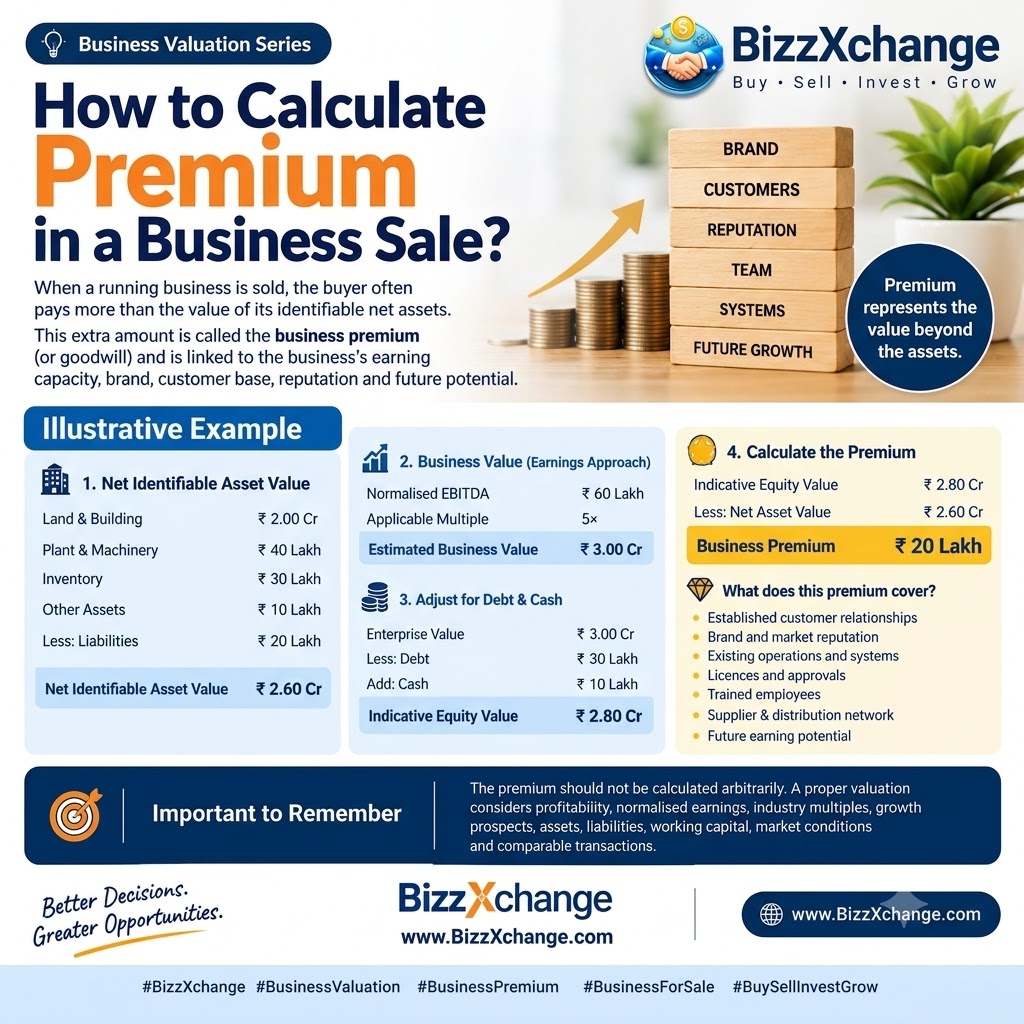
    When an established running business is sold, the buyer may pay more than the value of its identifiable net assets. This additional amount is generally attributable to the business’s earning capacity, brand, customer base, reputation, licences, systems, trained workforce and future potential.

    Illustrative Example

    Suppose a running manufacturing business has the following assets:

    • Land & Building – ₹2.00 Crore
    • Plant & Machinery – ₹40 Lakh
    • Inventory – ₹30 Lakh
    • Other Assets – ₹10 Lakh
    • Less: Liabilities – ₹20 Lakh

    Net Identifiable Asset Value = ₹2.60 Crore

    Now assume the business has:

    • Normalised EBITDA – ₹60 Lakh
    • Applicable EBITDA Multiple – 5×

    Therefore:

    Estimated Business Value = ₹60 Lakh × 5 = ₹3.00 Crore

    After considering debt and cash:

    • Enterprise Value – ₹3.00 Crore
    • Less: Debt – ₹30 Lakh
    • Add: Cash – ₹10 Lakh

    Indicative Equity Value = ₹2.80 Crore

    How is the Premium Calculated?

    If the fair value of identifiable net assets is ₹2.60 Crore and the indicative equity value is ₹2.80 Crore:

    Business Premium = ₹2.80 Crore − ₹2.60 Crore

    Business Premium = ₹20 Lakh

    This ₹20 lakh represents the value attributable to factors beyond the identifiable net assets, such as:

    • Established customer relationships
    • Brand and market reputation
    • Existing business operations
    • Licences and approvals
    • Trained employees and operating systems
    • Established suppliers and distribution network
    • Future earning potential

    Important Point

    The premium should not be determined arbitrarily. A proper business valuation should consider profitability, normalised earnings, industry multiples, growth prospects, assets, liabilities, working capital, market conditions and comparable transactions.

    Therefore, in a business sale:

    Asset Value + Value of Business/Earning Capacity = Overall Business Value

    The actual premium depends on the facts and circumstances of each business and should be supported by an appropriate valuation methodology.

    Planning to sell or acquire a business? BizzXchange helps business owners and buyers make informed decisions with professional business valuation, due diligence, company transfer, and merger & acquisition services. Get expert guidance to understand your business value, assess potential opportunities, and approach your transaction with greater clarity and confidence.

  • What Documents Do You Need to Sell a Business? A Complete Seller’s Checklist

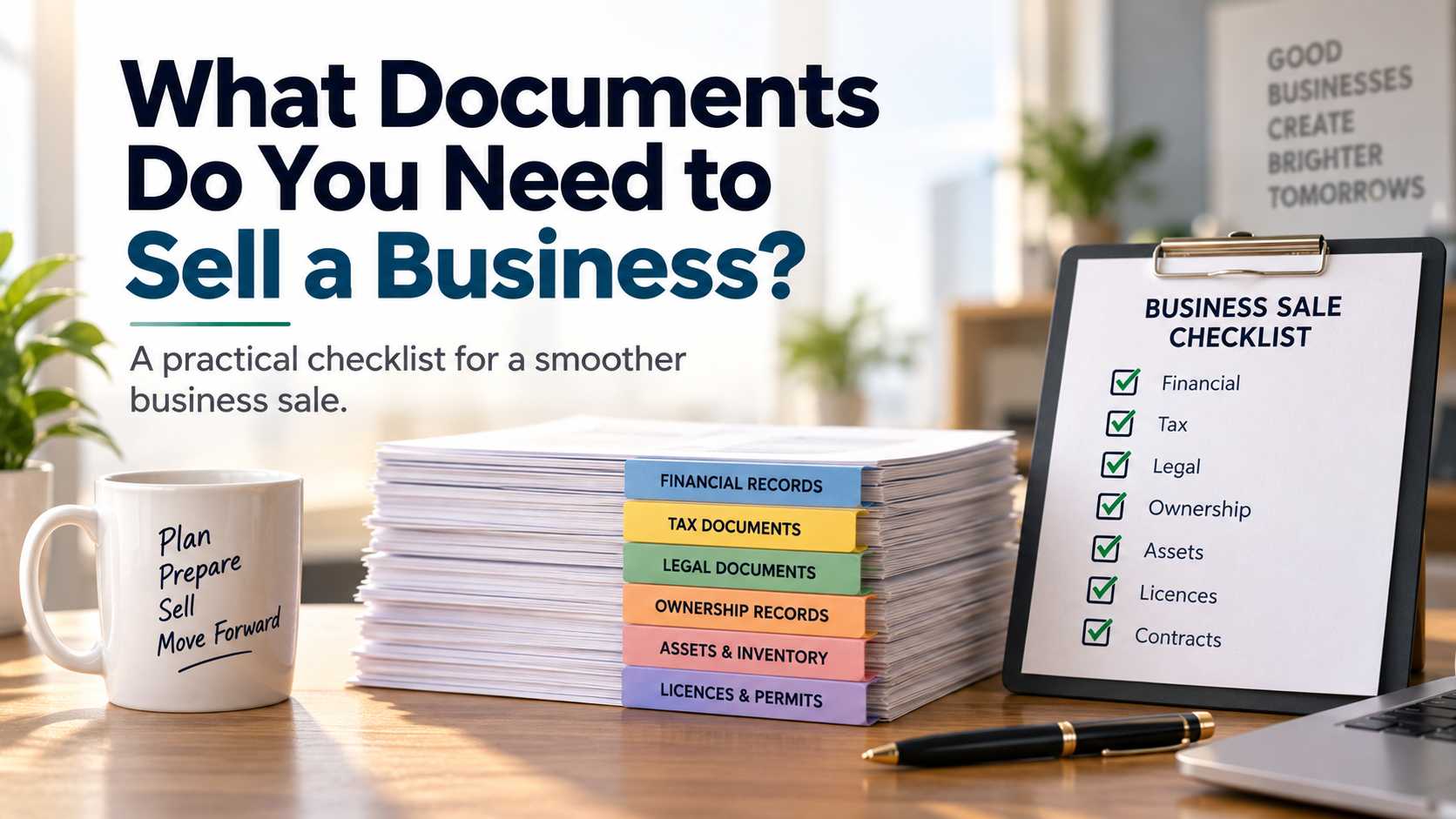
    What Documents Do You Need to Sell a Business? A Complete Seller’s Checklist

    Selling a business is more than agreeing on a price with a buyer. Before a serious buyer can evaluate the opportunity, you will usually need to provide documents that explain the business’s financial position, ownership, operations, assets, liabilities, and legal status.

    Having these documents ready can make the selling process more organized and can help buyers understand what they are actually considering.

    The exact documents required will depend on the type of business, industry, ownership structure, assets involved, and whether the transaction involves an asset sale, share/equity transfer, or another arrangement. However, most business sales involve several common categories of information.

    Here is a practical checklist of the documents you may need when preparing to sell a business.

    1. Business Registration and Ownership Documents

    The first set of documents should establish that the business exists legally and identify who owns it.

    Depending on the business structure, these may include:

    • Business registration or incorporation documents
    • Certificate of incorporation, where applicable
    • Partnership deed
    • LLP-related documents, where applicable
    • Proprietorship-related registration documents
    • Memorandum and Articles of Association, where applicable
    • Shareholding details
    • Ownership records
    • Partnership or shareholder agreements
    • Board resolutions or ownership approvals related to the proposed sale

    2. Financial Statements and Accounting Records

    Financial information is one of the most important parts of a business sale.

    A buyer generally wants to understand how the business has performed historically and what its current financial position looks like.

    Prepare relevant records such as:

    • Profit and loss statements
    • Balance sheets
    • Cash-flow statements
    • Income and expense records
    • Financial statements for previous years
    • Current-year financial information
    • Revenue records
    • Major expense details
    • Accounts receivable
    • Accounts payable
    • Outstanding loans and borrowings
    • Details of other financial liabilities

    3. Tax Documents

    Tax records can be an important part of the buyer’s due diligence process.

    Depending on the business and applicable requirements, documents may include:

    • Income tax returns
    • GST registration and relevant GST records
    • GST returns
    • Tax payment records
    • Tax assessments
    • Notices received from tax authorities
    • Details of outstanding tax liabilities
    • Other applicable statutory tax records

    4. Bank and Loan Documents

    Buyers may also need to understand the business’s financial obligations.

    Prepare relevant information relating to:

    • Business bank accounts
    • Business loans
    • Working capital facilities
    • Equipment financing
    • Outstanding borrowings
    • Security or collateral arrangements
    • Repayment schedules
    • Guarantees
    • Other material financial commitments

    5. Contracts and Agreements

    A running business often depends on agreements with customers, suppliers, landlords, employees, distributors, service providers, or other parties.

    Important contracts may include:

    • Customer agreements
    • Supplier agreements
    • Distribution agreements
    • Franchise agreements
    • Lease or rental agreements
    • Service contracts
    • Maintenance agreements
    • Vendor contracts
    • Technology agreements
    • Long-term commercial arrangements

    6. Property and Lease Documents

    If the business operates from a physical location, property-related documentation may be important.

    This can include:

    • Property ownership documents
    • Lease agreements
    • Rental agreements
    • Renewal terms
    • Security deposit details
    • Property-related permissions
    • Details of property-related liabilities
    • Documents relating to major improvements or modifications

    7. Licences, Registrations and Permits

    Certain businesses cannot operate without specific registrations, licences, approvals, or permits.

    Depending on the industry, you may need to organize:

    • Business licences
    • Industry-specific registrations
    • Trade licences
    • Local authority permissions
    • Regulatory approvals
    • Environmental permissions, where applicable
    • Health or safety-related approvals
    • Professional licences
    • Operating permits

    8. Employee and HR Documents

    Employees can represent a significant part of a running business.

    Relevant information may include:

    • Employee list
    • Job roles
    • Salary information
    • Employment agreements
    • Benefits and incentives
    • Pending employee claims
    • Statutory employment records
    • Leave or other outstanding obligations
    • Details of key employees

    9. Asset and Inventory Records

    If physical assets are part of the business, prepare a clear record of what is included in the proposed sale.

    This may include:

    • Machinery
    • Equipment
    • Furniture
    • Vehicles
    • Computers and technology equipment
    • Tools
    • Inventory
    • Fixtures and fittings
    • Other significant business assets

    10. Intellectual Property Documents

    A business may have valuable intangible assets that need to be identified.

    These can include:

    • Trademarks
    • Brand names
    • Logos
    • Copyrighted materials
    • Domain names
    • Software
    • Proprietary technology
    • Designs
    • Patents, where applicable
    • Marketing assets
    • Social media accounts

    11. Customer and Supplier Information

    Customer relationships can be one of the most valuable parts of an established business.

    Useful information may include:

    • Customer concentration
    • Major customer agreements
    • Recurring customers
    • Supplier relationships
    • Major suppliers
    • Outstanding customer commitments
    • Recurring contracts
    • Sales channels

    12. Business Performance and Sales Data

    Financial statements tell part of the story. Buyers may also want to understand how the business generates revenue.

    Depending on the business, useful records can include:

    • Monthly sales figures
    • Revenue by product or service
    • Sales by location
    • Major customer contribution
    • Order history
    • Recurring revenue
    • Marketing performance
    • Sales pipeline
    • Business growth trends

    13. Legal and Dispute-Related Documents

    If the business has been involved in any legal proceedings, claims, disputes, or notices, relevant documents may need to be disclosed during due diligence.

    These may include:

    • Pending litigation
    • Legal notices
    • Regulatory notices
    • Customer disputes
    • Supplier disputes
    • Employee disputes
    • Settlement agreements
    • Arbitration matters
    • Material legal correspondence

    14. Insurance Documents

    Insurance policies can also be relevant, particularly for businesses with physical premises, employees, vehicles, machinery, or significant operational risks.

    Depending on the business, prepare:

    • Current insurance policies
    • Policy schedules
    • Renewal information
    • Claims history
    • Coverage details
    • Relevant insurance correspondence

    15. Business Debts and Liabilities

    One of the most important questions for a buyer is:

    “What liabilities will I be taking on?”

    Prepare a clear summary of known liabilities, such as:

    • Bank loans
    • Supplier payments
    • Employee-related obligations
    • Tax liabilities
    • Lease obligations
    • Outstanding customer refunds
    • Legal liabilities
    • Equipment financing
    • Other material commitments

    When Should You Prepare These Documents?

    Ideally, before you start serious discussions with potential buyers.

    You do not necessarily need to send every document to every person who shows interest.

    A more organized process is to prepare the documents in stages.

    Stage 1: Initial Business Information

    Start with basic information such as:

    • Business type
    • Industry
    • Location
    • Years in operation
    • Asking price
    • Revenue
    • Profitability
    • Assets
    • Reason for sale, where appropriate

    Stage 2: Serious Buyer Discussion

    Once a buyer demonstrates genuine interest, additional business and financial information can be shared as appropriate.

    Stage 3: Due Diligence

    At this stage, the buyer may review more detailed financial, legal, operational, ownership, asset, tax, and contractual documentation.

    Stage 4: Transaction

    The final documentation depends on the structure and terms of the transaction and should be reviewed by the appropriate professional advisers.

    Common Mistakes Sellers Should Avoid

    1. Waiting Until the Last Minute

    Collecting documents only after finding a buyer can slow down the process.

    2. Providing Inconsistent Information

    Revenue, expenses, ownership details, assets, and liabilities should be consistent across the documents you provide.

    3. Hiding Known Liabilities

    Undisclosed obligations can create problems during due diligence and negotiations.

    4. Sharing Sensitive Information Too Early

    Not every interested person needs access to confidential customer, employee, financial, or commercial information.

    5. Forgetting About Digital Assets

    Websites, domains, software, online accounts, databases, social media accounts, and digital intellectual property may also be important business assets.

    6. Assuming Every Licence Automatically Transfers

    Some registrations and permissions may have specific transfer requirements. Check the applicable rules before representing that a licence will transfer with the business.

    Sell Your Business Through BizzXchange

    If you are planning to sell a running business, BizzXchange provides an online platform where business owners can list their business details and connect with interested buyers. Sellers can create an account, provide their business information, submit the listing for approval, and connect with interested parties through the platform.

    BizzXchange supports opportunities across different business types and industries, allowing sellers to present information such as business category, location, asking amount, turnover, EBITDA, and equity offered where applicable.

    If you are ready to sell your business, prepare your documents, organize your business information, and explore the opportunity to list your business on BizzXchange.

    Explore BizzXchange Business Opportunities

  • Asset Sale vs Business Sale – What’s the Difference?

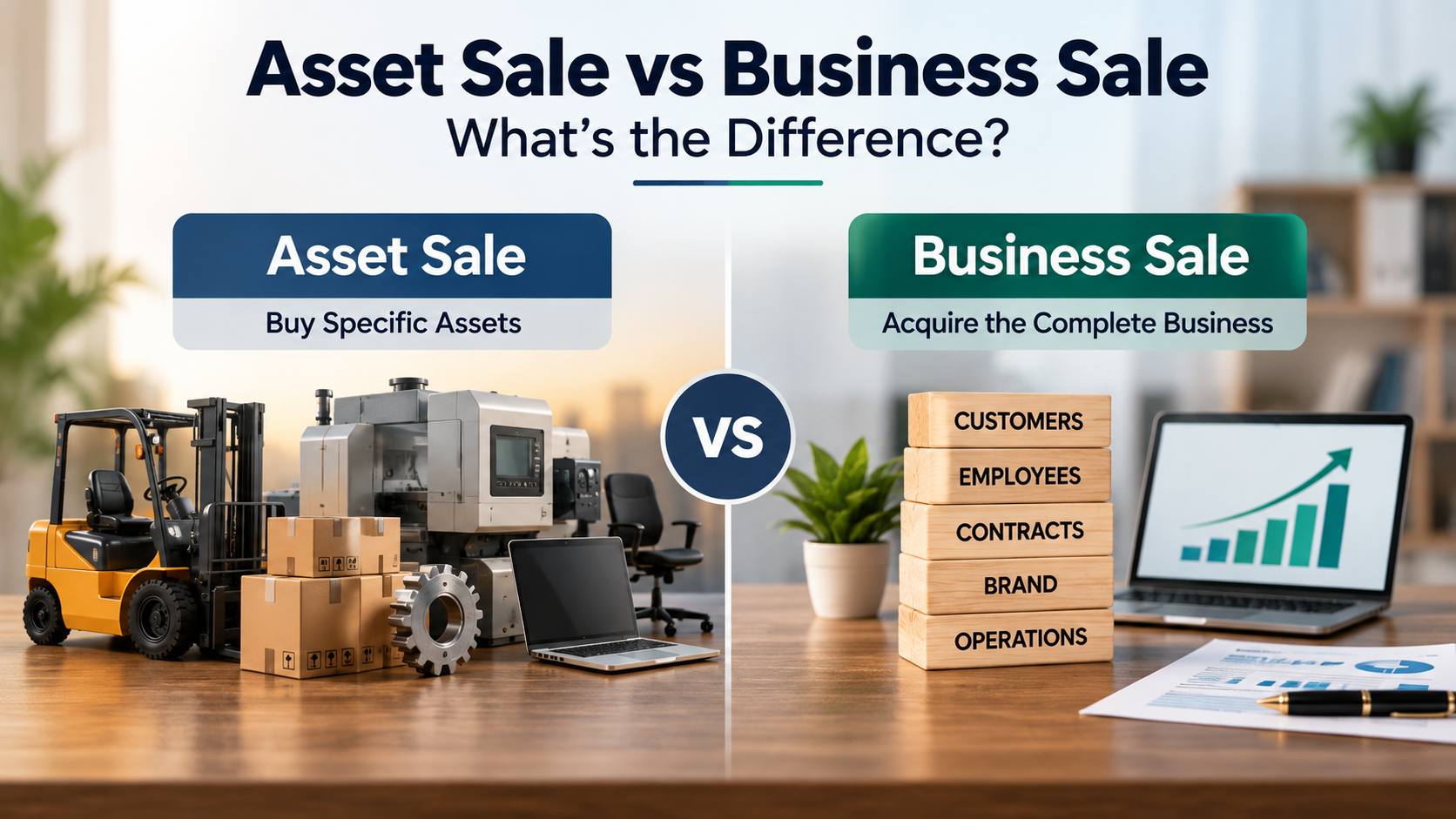
    Asset Sale vs Business Sale – What’s the Difference?

    Selling a business is not always the same as selling its assets. While the terms are sometimes used interchangeably, an asset sale and a business sale can involve very different things.

    The biggest difference is what the buyer is actually acquiring.

    In an asset sale, the transaction generally focuses on selected assets of the business, such as machinery, equipment, inventory, furniture, vehicles, intellectual property, or other specified assets. In a business sale, the buyer may acquire the operating business as a whole, including its established operations, assets, customer relationships, contracts, goodwill, and other elements included in the transaction.

    Understanding this difference is important for both buyers and sellers because it can affect the price, liabilities, contracts, employees, licences, taxes, and the way the transaction is structured.

    This guide explains the difference between an asset sale and a business sale in simple terms.

    What Is an Asset Sale?

    An asset sale is a transaction where a buyer purchases specific assets belonging to a business rather than necessarily acquiring the entire business entity.

    For example, a manufacturing business might sell:

    • Machinery
    • Production equipment
    • Furniture
    • Vehicles
    • Inventory
    • Computers
    • Tools
    • Certain intellectual property
    • Other specified business assets

    The buyer and seller generally identify which assets are included in the transaction.

    The business itself may continue to exist after the sale unless the seller decides to close or restructure it.

    Simple Example

    Imagine a manufacturing unit owns machinery, equipment, inventory, furniture, and other assets.

    A buyer may be interested only in purchasing the machinery and equipment to use in another operation.

    In that situation, the transaction can be structured around those specific assets rather than the entire operating business.

    What Is a Business Sale?

    A business sale generally involves the transfer of an operating business or an ownership interest in the entity that owns and operates the business.

    Depending on the structure, the buyer may acquire a combination of:

    • Business assets
    • Customer relationships
    • Brand or trade name
    • Goodwill
    • Employees
    • Supplier relationships
    • Business processes
    • Contracts
    • Intellectual property
    • Inventory
    • Equipment
    • Business premises or lease rights
    • Other operating components

    The exact scope depends on the agreement between the buyer and seller and the legal structure of the transaction.

    BizzXchange’s marketplace, for example, includes opportunities across different business structures and industries, with listings showing information such as business nature, industry, asking amount, equity offered, turnover, and EBITDA where provided.

    Why Does the Difference Matter to a Buyer?

    For a buyer, the difference between an asset sale and a business sale can significantly affect the opportunity.

    Buying Assets

    If you purchase selected assets, you may have to build or arrange the rest of the operation yourself.

    For example, buying machinery does not automatically give you:

    • Existing customers
    • Employees
    • Supplier relationships
    • Brand recognition
    • Established revenue
    • Operating processes

    The value may therefore be concentrated in the assets themselves.

    Buying an Operating Business

    When purchasing an operating business, the buyer may be acquiring a combination of tangible and intangible value.

    This can include:

    • Existing customers
    • Revenue history
    • Employees
    • Supplier relationships
    • Brand
    • Business processes
    • Equipment
    • Inventory
    • Established location

    However, an operating business may also come with existing obligations and risks, which is why proper due diligence is important.

    Why Does the Difference Matter to a Seller?

    For a seller, the choice between selling assets and selling an operating business can affect the transaction structure and what remains after the sale.

    A seller should consider:

    • Which assets are being sold?
    • Is the business continuing after the transaction?
    • Are contracts transferable?
    • What happens to employees?
    • What happens to existing liabilities?
    • Is the brand included?
    • Is intellectual property included?
    • Is inventory included?
    • What happens to the business premises?
    • How will the transaction be documented?

    The seller should also understand whether the buyer is interested in the entire operating business or only specific assets.

    Asset Sale vs Business Sale: Which One Is Better?

    There is no universal answer.

    The appropriate structure depends on the circumstances of the buyer, seller, business, assets, liabilities, contracts, tax considerations, and applicable legal requirements.

    An asset-focused transaction may make sense when:

    • The buyer wants specific assets.
    • The buyer does not want the entire business.
    • Particular equipment or property is the main attraction.
    • The parties want to clearly identify what is being transferred.

    A business acquisition may make sense when:

    • The buyer wants an operating business.
    • Existing customers are important.
    • The business has established revenue.
    • Employees and operating systems are valuable.
    • The buyer wants to continue an existing business model.

    The decision should be evaluated based on the specific transaction rather than assuming one structure is always preferable.

    Documents to Review Before a Transaction

    Depending on the type of transaction, buyers and sellers may need to review documents such as:

    • Business registration documents
    • Ownership records
    • Financial statements
    • Tax records
    • Loan documents
    • Asset lists
    • Inventory records
    • Property or lease documents
    • Employee records
    • Major customer and supplier agreements
    • Licences and permits
    • Intellectual property records
    • Legal documents
    • Insurance records

    Not every document needs to be shared at the earliest stage. Sensitive information should be handled carefully and shared at the appropriate stage of the transaction.

    Common Mistakes to Avoid

    Focusing Only on the Asking Price

    A low purchase price does not necessarily mean a better opportunity. Buyers should understand what is actually included.

    Assuming All Liabilities Are Excluded

    The treatment of liabilities depends on the transaction structure and applicable agreements. Buyers should verify this rather than make assumptions.

    Ignoring Intangible Assets

    Customers, brand recognition, intellectual property, supplier relationships, and established processes can have significant commercial value.

    Failing to Verify Asset Ownership

    Before purchasing an asset, confirm that the seller has the right to sell it and identify any financing, security interests, or other restrictions that may apply.

    Not Reviewing Contracts

    Important business relationships may depend on contracts that contain assignment, change-of-control, termination, or other relevant provisions.

    Relying Only on Seller-Provided Numbers

    Financial information should be reviewed and verified through appropriate due diligence.

    Asset Sale or Business Sale: The Key Takeaway

    The simplest way to remember the difference is:

    An asset sale focuses on what the business owns. A business sale focuses on the operating business and the elements that allow it to continue as an enterprise.

    An asset transaction can involve selected machinery, inventory, equipment, property, intellectual property, or other identified assets.

    A business acquisition can involve a broader combination of assets, customers, employees, contracts, goodwill, operations, and other components of an established business.

    The right approach depends on what the buyer wants to acquire and what the seller wants to transfer.

    For significant transactions, buyers and sellers should obtain appropriate professional advice to understand the legal, tax, financial, and contractual implications of the proposed structure.

    Find Business Opportunities on BizzXchange

    If you are considering buying an existing business rather than building one from scratch, BizzXchange provides an online marketplace where buyers can explore business and investment opportunities across different industries and locations in India. The platform allows users to filter opportunities by factors such as business nature, industry, and established year, and individual listings can provide information such as asking amount, equity offered, turnover, and EBITDA where available.

    BizzXchange also supports sellers looking to present their businesses to potential buyers through its online platform.

    Whether you are looking to buy a running business, sell an existing business, or explore investment opportunities, start by understanding exactly what is being offered and carry out appropriate due diligence before making a decision.

  • Business Opportunities in India: Businesses for Sale and Investment Opportunities

    Business Opportunities in India: Businesses for Sale and Investment Opportunities

    Finding the right business to buy is not always about starting from scratch. Across India, entrepreneurs and investors can find running businesses, manufacturing units, retail businesses, schools, hospitality businesses, IT companies, rental businesses and other established opportunities that may offer a faster route into an existing market.

    The important part is knowing what to look for, how much to invest and how to evaluate the business before making a decision.

    BizzXchange provides a marketplace where buyers can explore businesses available for sale or investment based on factors such as business nature, industry, established year and equity offered. Individual listings may also provide information such as asking amount, turnover and EBITA, depending on the opportunity.

    If you are searching for businesses for sale in India, the following opportunities show the variety of businesses currently available on the platform.

    Businesses for Sale in India: Current Opportunities

    The business-for-sale market is not limited to one particular industry. Depending on your budget and experience, you may find opportunities ranging from small businesses requiring a few lakh rupees to larger businesses requiring several crores.

    Here are some of the opportunities currently listed on BizzXchange.

    1. Senior Secondary School for Sale in Delhi

    For buyers interested in the education sector, BizzXchange currently lists a Senior Secondary School in New Delhi.

    2. Optical Store for Sale in Uttarakhand

    If you are looking for a smaller retail business opportunity, BizzXchange currently lists a Perfect Optical Store in Khatima, Uttarakhand.

    3. Marriage Garden and Banquet Business for Sale

    Hospitality and event-related businesses can appeal to buyers who want to operate an established physical business.

    Manufacturing Businesses for Sale in India

    Manufacturing remains an important category for business buyers because an existing manufacturing business can provide infrastructure, machinery, employees, supplier relationships and production capabilities that may take years to establish from scratch.

    BizzXchange currently has several manufacturing opportunities listed on its platform.

    AAC Block and Fly Ash Brick Manufacturing Unit

    One current opportunity is an AAC Block & Fly Ash Brick Manufacturing Unit in Jabalpur, Madhya Pradesh.

    Spice Manufacturing Factory for Sale in Uttar Pradesh

    Another manufacturing opportunity currently listed is Lalaji Foods and Beverages Private Limited, described as a spice manufacturing factory for sale in Barabanki, Uttar Pradesh.

    Business Opportunities in Jaipur

    Jaipur deserves a separate mention because buyers searching for businesses for sale in Rajasthan have several types of opportunities to consider.

    BizzXchange currently has multiple Jaipur-related listings, including a mushroom farm setup, toy shop setup, play group school and PG business.

    Mushroom Farm Setup for Sale in Jaipur

    A Mushroom Farm Setup for Sale in Jaipur is currently listed with an asking amount of ₹25 lakh and 100% equity for sale.

    Toy Shop Setup for Sale in Jaipur

    Another Jaipur opportunity is a Complete Toy Shop Setup for Sale.

    PG for Sale in Jaipur With Rental Income

    Real-estate-backed businesses can also attract buyers who prefer rental income.

    IT Companies and Startups for Sale

    Not every business opportunity requires a physical shop, factory or property.

    Technology businesses can also be acquired.

    BizzXchange currently lists SOLOTECH SERVICES PRIVATE LIMITED, described as a five-year-old Bengaluru-based IT company.

    The listing shows an asking amount of ₹3.5 lakh, 100% equity for sale, latest turnover of ₹6.76 lakh and latest EBITA of -₹4.34 lakh.

    Another Bengaluru opportunity is TARK INNOVATIONS PRIVATE LIMITED, described as a 3.5-year-old IT startup.

    It is listed at ₹5 lakh, with 100% equity for sale and no revenue currently shown on the listing.

    These examples also demonstrate why buyers should not judge a business purely by its asking price.

    A low-priced company may have limited revenue or require additional investment, while another business may have established customers, assets and stronger financial performance.

    Nursing Home for Sale in Delhi

    Healthcare is another sector where business acquisitions can provide an opportunity to enter an established operation.

    BizzXchange currently lists a Nursing Home for Sale in North East Delhi with an asking amount of ₹11 crore and 100% equity for sale.

    For healthcare businesses, buyers need to pay close attention to licensing, registrations, property documents, equipment, staffing, patient records, regulatory compliance and other applicable requirements.

    Healthcare businesses should receive particularly detailed professional and legal due diligence before an acquisition.

    Business Opportunities Under ₹50 Lakh

    For first-time buyers, investment size is often the biggest concern.

    The current BizzXchange marketplace includes several opportunities below ₹50 lakh, including the optical store, mushroom farm setup, toy shop setup and Bengaluru IT opportunities.

    This makes it possible for buyers with smaller investment budgets to explore different types of businesses rather than assuming that buying an existing business always requires several crores.

    However, remember that your acquisition budget should not be your entire business budget.

    You may still need money for:

    • Working capital
    • Salaries
    • Inventory
    • Repairs
    • Marketing
    • Professional fees
    • Licenses
    • Unexpected expenses

    Business Opportunities Above ₹1 Crore

    For larger investors, BizzXchange also has opportunities requiring significant capital.

    Current listings include:

    • ₹1.40 crore spice manufacturing factory
    • ₹2.5 crore Jaipur PG
    • ₹5 crore AAC block and fly ash brick manufacturing unit
    • ₹11 crore Delhi nursing home
    • ₹13.50 crore senior secondary school
    • ₹35 crore marriage garden and banquet business

    The range demonstrates that the business acquisition market can serve different types of buyers, from entrepreneurs looking for relatively smaller businesses to investors looking at larger established operations.

    How to Find the Right Business for You

    Before searching through listings, define your requirements.

    For example:

    Budget: ₹25 lakh–₹50 lakh
    Location: Jaipur
    Industry: Retail/Food/Services
    Business type: Running business
    Equity: 100%
    Experience: Retail
    Goal: Existing revenue + growth potential

    Once your requirements are clear, you can narrow your search instead of looking at every business available.

    BizzXchange allows buyers to explore opportunities through filters including company name, business nature, industry and established year, with equity percentage also available as a filter.

    The platform’s buyer journey is essentially:

    Define your requirement → Find opportunities → Explore businesses → Review the opportunity → Contact the seller.

    Why BizzXchange Can Be Useful for Business Buyers

    Finding businesses for sale through individual contacts can be difficult because opportunities are scattered across different sources.

    BizzXchange brings different types of opportunities together in one marketplace.

    Buyers can explore businesses across industries and locations, compare available information and identify opportunities that match their investment requirements.

    The marketplace currently includes opportunities in manufacturing, education, retail, healthcare, IT, agriculture, hospitality, rental businesses and other categories, giving buyers a broader range of businesses to evaluate.

    Explore the current business opportunities on BizzXchange and find a business that matches your investment goals.

  • Businesses for Sale in Delhi

    Businesses for Sale in Delhi

    Looking for a business for sale in Delhi?

    Delhi has a strongly service-oriented economy. The Delhi Economic Survey estimates that the tertiary sector accounted for 86.32% of the city’s GSVA in 2025–26, while the city’s business ecosystem also includes manufacturing and other industries.

    Delhi’s industrial and economic policy highlights areas including financial services, technology and innovation, IT & ITeS, healthcare, education, logistics and other services.

    For business buyers, this creates a broad market to explore.

    Why Consider Buying a Business in Delhi?

    An established Delhi business may provide access to:

    • Existing customers
    • Established suppliers
    • Trained employees
    • Business infrastructure
    • Existing revenue
    • Local market knowledge
    • Existing contracts

    Instead of spending the early years building a customer base, a buyer can potentially focus on improving and expanding an operating business.

    Existing Business vs Starting From Scratch

    Starting a new company gives you complete control.

    Buying an existing business may provide a head start.

    The better option depends on your:

    • Capital
    • Experience
    • Risk tolerance
    • Time commitment
    • Growth expectations

    How to Choose a Business

    Don’t select an opportunity based only on the asking price.

    Compare:

    • Asking price
    • Turnover
    • Profitability
    • Assets
    • Liabilities
    • Customer base
    • Employees
    • Business location
    • Industry outlook
    • Growth potential

    A proper valuation and due diligence process should be completed before finalizing an acquisition.

    For Delhi Business Sellers

    If you’re planning to sell your business, create a detailed listing that gives potential buyers a clear understanding of the opportunity.

    Include:

    • Industry
    • Location
    • Asking amount
    • Turnover
    • Profit/EBITDA
    • Equity offered
    • Assets
    • Business history
    • Growth potential

    Explore Businesses for Sale in Delhi →

    List Your Business for Sale →

    How BizzXchange Works

    1. Define Your Requirement

    Tell us what type of business you’re looking for, your preferred location, industry and investment range.

    2. Explore Business Opportunities

    Browse available businesses and use the available filters to narrow down relevant opportunities.

    3. Review the Details

    Compare information such as asking price, turnover, EBITDA, equity offered, industry and business details where available.

    4. Express Your Interest

    If an opportunity matches your requirements, contact the seller or express interest through the platform.

    5. Conduct Due Diligence

    Before making any final decision, independently verify the business’s financial, legal and operational information.

    This follows the existing BizzXchange buyer journey—identify a requirement, find opportunities, explore listings and contact sellers.

  • Businesses for Sale in Mumbai

    Businesses for Sale in Mumbai

    Looking for a business for sale in Mumbai?

    BizzXchange helps buyers discover existing businesses and investment opportunities across different industries. Instead of starting a business from scratch, buyers can explore established businesses that may already have customers, operations, assets, employees or revenue history.

    Mumbai is one of India’s major commercial and financial centers, with a broad business ecosystem spanning services, manufacturing, technology, finance, pharmaceuticals, food processing, textiles, electronics and other industries. Maharashtra’s current industrial focus also includes automobiles, pharmaceuticals, chemicals, electronics, food processing, IT, gems and jewellery, textiles and other sectors.

    That makes Mumbai an important market for entrepreneurs and investors looking for established business opportunities.

    Business Opportunities You Can Explore

    Depending on current availability, Mumbai buyers may be interested in opportunities across areas such as:

    Manufacturing

    Explore established manufacturing businesses where existing machinery, suppliers, employees and operational infrastructure may already be in place.

    IT & Technology

    Mumbai’s wider business ecosystem includes technology and digital businesses, making established IT, software and technology-enabled businesses worth exploring.

    Food & Hospitality

    Restaurants, food businesses, catering operations and hospitality-related businesses can provide opportunities for entrepreneurs who want to enter an operating business.

    Retail & Consumer Businesses

    Buyers can explore established retail businesses where existing customers, inventory, supplier relationships and local presence may provide a starting point for growth.

    Professional & Business Services

    Service-based businesses can be attractive to buyers looking for businesses that may have lower physical infrastructure requirements.

    How BizzXchange Helps Buyers

    The BizzXchange platform allows buyers to:

    1. Identify your requirement
    Define your preferred industry, budget and business type.

    2. Find opportunities
    Use available filters to discover relevant businesses.

    3. Review business details
    Study information such as asking amount, turnover, EBITDA, equity and business details where provided.

    4. Express interest
    Contact the seller or use the platform’s interest option to take the conversation forward.

    Sell Your Business in Mumbai

    If you’re a Mumbai business owner looking to sell your company, BizzXchange can help you present your opportunity to potential buyers.

    Provide relevant information about:

    • Business category
    • Location
    • Asking price
    • Turnover
    • Profitability
    • Equity offered
    • Business history
    • Assets
    • Growth opportunities

    Ready to explore opportunities?

    Browse Businesses for Sale in Mumbai →

    Looking to sell a business? List Your Business on BizzXchange →

  • Business Valuation in India: How to Determine What a Business Is Worth

    Business Valuation in India: How to Determine What a Business Is Worth

    If you’re planning to buy or sell a business, one of the first questions you’ll probably ask is:

    “How much is the business actually worth?”

    There isn’t a single formula that works for every company.

    A profitable manufacturing company, a restaurant, an IT services company, and a small retail business can all require different approaches to valuation.

    Understanding the basics of business valuation in India can help buyers make more informed decisions and help sellers establish more realistic expectations.

    What Is Business Valuation?

    Business valuation is the process of estimating the economic value of a business.

    A valuation can consider:

    • Revenue
    • Profit
    • Assets
    • Liabilities
    • Cash flow
    • Customers
    • Brand
    • Intellectual property
    • Employees
    • Market conditions
    • Growth potential
    • Industry outlook

    The objective is to develop a reasonable understanding of what the business may be worth.

    Why Is Business Valuation Important?

    Imagine that a business owner is asking ₹1 crore for a company.

    At first glance, the price may seem reasonable.

    But what if:

    • Revenue has been declining?
    • Most sales come from one customer?
    • The business has significant debt?
    • Equipment needs replacement?
    • Profits are dependent on the owner?
    • The industry is becoming less attractive?

    Without proper evaluation, the buyer may pay more than the business is actually worth.

    A valuation helps create a stronger foundation for negotiation and decision-making.

    1. Revenue-Based Valuation

    Revenue is one of the easiest numbers to understand, but revenue alone does not tell you what a business is worth.

    Two businesses can generate ₹1 crore in annual revenue but have completely different profitability.

    For example:

    Business A

    Revenue: ₹1 crore
    Profit: ₹25 lakh

    Business B

    Revenue: ₹1 crore
    Profit: ₹5 lakh

    Although both businesses generate the same revenue, their financial profiles are very different.

    Therefore, revenue should generally be considered alongside profitability and other financial factors.

    2. Profit-Based Valuation

    Profit is often an important part of business valuation.

    Buyers want to understand how much money the business generates after accounting for its operating expenses.

    Depending on the business, valuation may consider metrics such as:

    • Net profit
    • EBITDA
    • Operating profit
    • Seller’s discretionary earnings

    The appropriate metric depends on the type and size of the business.

    3. Asset-Based Valuation

    For businesses with significant physical assets, an asset-based approach may be useful.

    Assets could include:

    • Property
    • Machinery
    • Equipment
    • Vehicles
    • Inventory
    • Furniture
    • Technology

    The valuation should also account for liabilities and obligations.

    A business with ₹1 crore worth of assets does not necessarily have a ₹1 crore valuation if it also has substantial debt or other liabilities.

    4. Cash Flow

    Cash flow is another important consideration.

    A business can report profits but still experience cash-flow problems.

    Buyers should therefore examine:

    • Money coming into the business
    • Operating expenses
    • Debt payments
    • Working capital requirements
    • Seasonal fluctuations
    • Receivables

    A healthy and predictable cash flow can make a business more attractive to potential buyers.

    5. Customer Concentration

    The customer base can significantly affect the value and risk profile of a business.

    Consider two companies.

    Company A:
    500 customers generating revenue across multiple markets.

    Company B:
    5 customers generating most of the revenue.

    Company B may have greater concentration risk.

    If one major customer leaves after the acquisition, revenue could fall substantially.

    Therefore, customer diversification should be considered during valuation.

    6. Industry and Market Conditions

    The industry in which the company operates also matters.

    A business operating in a growing market may have stronger future potential than one operating in a declining market.

    Consider:

    • Market size
    • Competition
    • Industry growth
    • Customer demand
    • Regulatory environment
    • Technology changes
    • Future opportunities

    A business with strong growth potential may command a different valuation than a similar business in a stagnant market.

    Common Mistakes When Valuing a Business

    Mistake 1: Looking Only at Revenue

    High revenue doesn’t automatically mean high value.

    Mistake 2: Ignoring Debt

    Outstanding liabilities can materially affect the actual value of an acquisition.

    Mistake 3: Accepting the Asking Price

    The seller’s asking price is not necessarily the fair market value.

    Mistake 4: Ignoring Future Risks

    A business may look profitable today but face significant challenges tomorrow.

    Mistake 5: Not Getting Professional Advice

    Depending on the transaction, professional financial, tax, and legal advice can help identify issues that a buyer may otherwise miss.

    Business valuation is not simply about putting a number on a company.

    It is about understanding what generates the company’s value, how sustainable that value is, and what risks could affect it in the future.

    If you’re considering buying a business in India, take time to understand the financials, assets, customers, liabilities, industry, and growth potential before negotiating a final price.

    A well-researched valuation can help buyers make better acquisition decisions and give sellers a stronger foundation for negotiations.

    Looking for businesses to buy in India?
    Explore BizzXchange to discover available business opportunities and find potential acquisitions that match your requirements.

  • Businesses for Sale in Jaipur

    Businesses for Sale in Jaipur

    Looking for businesses for sale in Jaipur?

    Jaipur is more than a tourism destination. The city and wider Rajasthan business ecosystem includes opportunities across manufacturing, tourism, retail, education, IT, textiles, handicrafts, gems and jewellery, logistics, food processing and other sectors. Rajasthan’s current investment focus includes sectors such as tourism, gems and jewellery, IT & ITeS, textiles, logistics and warehousing, education, food processing and auto components.

    BizzXchange gives buyers a place to explore existing businesses and investment opportunities in Jaipur.

    Businesses Available in Jaipur

    Current BizzXchange listings demonstrate that Jaipur can support different types of acquisition opportunities. For example, the platform has featured Jaipur opportunities including a mushroom farm setup, toy shop setup, PG/rental business and other local businesses at different points in its listings.

    Because listings change, buyers should check the current opportunity inventory rather than relying on a fixed list.

    Types of Businesses to Explore

    Manufacturing Businesses

    Jaipur and Rajasthan have a broad manufacturing ecosystem, including textiles, food processing, auto components, gems and jewellery and other industries.

    Hospitality & Tourism Businesses

    Jaipur’s tourism economy creates opportunities around hotels, accommodation, restaurants, travel-related businesses and other hospitality operations.

    Retail Businesses

    Established retail businesses can offer buyers an opportunity to take over an operating setup with existing customers and supplier relationships.

    Education & Accommodation

    Schools, coaching businesses, PGs, hostels and related businesses can be relevant opportunities depending on current listings.

    IT & Service Businesses

    Service-based businesses can be attractive to professionals looking to acquire an existing customer base rather than build one from scratch.

    Why Buy a Running Business in Jaipur?

    An existing business may already have:

    • Customers
    • Employees
    • Suppliers
    • Equipment
    • Processes
    • Revenue history
    • Local market presence

    This can give an entrepreneur a head start compared with building a new business.

    However, buyers should always investigate the financial and operational condition of the business before proceeding.

    How to Find the Right Business

    Start by deciding:

    Your budget: How much can you realistically invest?

    Your industry: Which sector matches your experience?

    Your involvement: Do you want an actively managed business or a more passive opportunity?

    Your objective: Are you looking for income, expansion, diversification or long-term growth?

    Once these requirements are clear, you can compare available opportunities more effectively.

    For Business Sellers in Jaipur

    Business owners who want to sell can use BizzXchange to present their opportunity to potential buyers.

    Include as much useful information as possible, including:

    • Business type
    • Location
    • Asking price
    • Turnover
    • EBITDA/profitability
    • Equity available
    • Assets
    • Business history
    • Reason for sale

    Clear information helps potential buyers understand the opportunity before initiating a discussion.

    Explore Businesses for Sale in Jaipur →

    List Your Jaipur Business for Sale →