Author: admin

  • How fixed assets can be valued while takeover of business?

    How fixed assets can be valued while takeover of business?

    When a business is taken over, valuing its fixed assets (like land, buildings, plant, machinery, furniture, vehicles, etc.) is a key part of determining the overall purchase price. The valuation depends on the purpose of takeover, industry, and negotiation between buyer and seller. Generally, fixed assets can be valued using the following methods:

    BizzXchange also provides the services of Fixed Assets valuation.

    1. Book Value Method

    • Based on the asset values recorded in the seller’s balance sheet.
    • Value = Original cost – Accumulated depreciation.
    • Limitations: May not reflect current market or realizable value, especially for older assets.

    2. Market Value Method

    • Assets are valued at the price they would fetch in the open market.
    • Suitable for land, buildings, and other assets that have an active market.
    • Often determined by independent valuers or appraisers.

    3. Replacement Cost Method

    4. Realizable Value Method

    • Value is estimated at the price that could be realized if the assets were sold today (after deducting selling costs).
    • Useful in liquidation or distressed takeover situations.

    5. Earning Capacity / Utility Value Method

    • Some assets are valued based on their ability to generate economic benefits.
    • For example, a machine that contributes significantly to production efficiency may be valued higher than book or scrap value.

    6. Valuer’s / Expert’s Opinion

    • Professional valuers (chartered engineers, real estate valuers, etc.) may be appointed to assess the fair value.
    • This is especially important in regulated takeovers, mergers, or when disputes may arise.

    ✅ In practice:

    • A mix of methods is used. For example, land & buildings may be valued at market value, machinery at replacement cost, and furniture/fixtures at written-down value.
    • The chosen method depends on the negotiation between buyer and seller, and the accounting/legal framework governing the takeover.
  • Process of LLP to Private Limited Company Conversion after Takeover

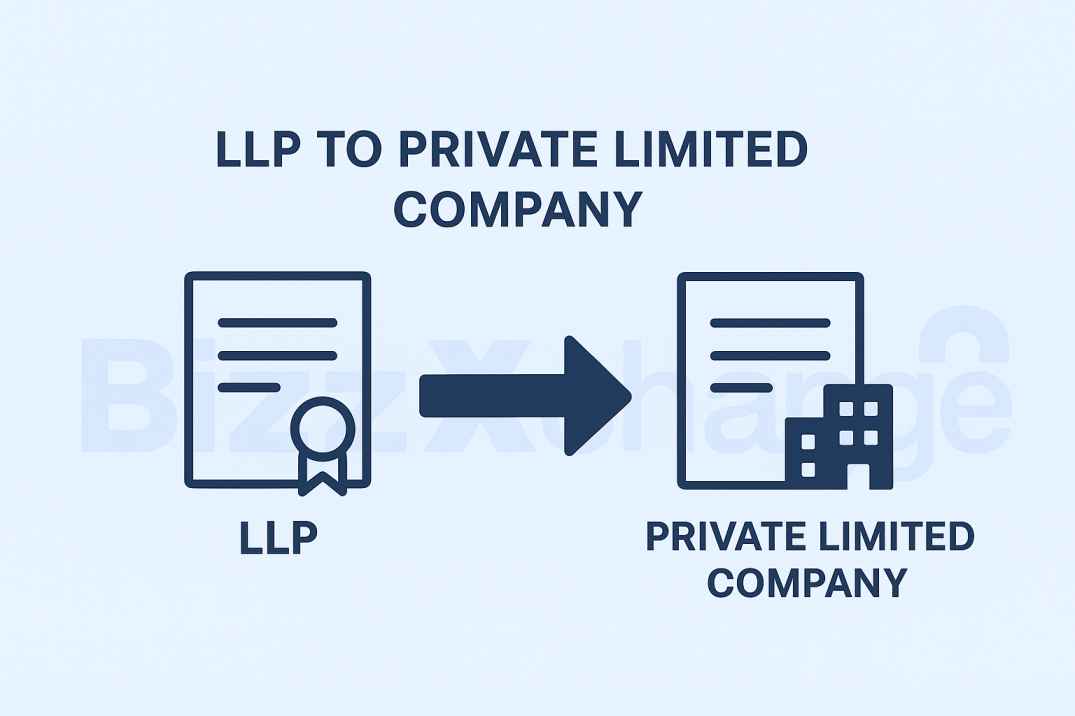
    Process of LLP to Private Limited Company Conversion after Takeover

    Complete the Takeover of LLP process

    • The LLP must first be taken over properly.
    • This means:
      • New owners become partners of the LLP.
      • The LLP agreement is updated to record new partners.
      • Old partners (if any) exit.
    • Once this takeover is complete, the conversion process can begin.

    Obtain Consent from Partners

    • All current partners of the LLP must agree to convert it into a Private Limited Company.
    • A resolution is passed by the partners giving their approval.
    • This consent is mandatory because conversion changes the legal structure.

    Name Approval of New Company

    • Apply for name reservation through RUN (Reserve Unique Name) on the MCA portal.
    • The name should end with “Private Limited”.
    • Example: “GreenTech LLP” → “GreenTech Private Limited Company”.
    • If the LLP wants to keep the same name, it can apply, but the suffix will change.

    Prepare Documents for Conversion

    Here is the list of key documents required:

    1. Incorporation Certificate of LLP
    2. LLP Agreement (latest version)
    3. List of Partners (who will become shareholders) with their shareholding ratios
    4. Consent Letters from all partners for conversion
    5. No Objection Certificate (NOC) from creditors, if LLP has loans
    6. Financial Statements of LLP (Balance Sheet & Profit/Loss Account) certified by a CA
    7. Proof of Registered Office Address (rent agreement/utility bill)
    8. Identity & Address Proofs of all partners/directors
    9. Declaration of Compliance signed by a professional (CA/CS/CMA/Advocate)

    BizzXchange help in these conversionprocess

    Draft MOA & AOA

    • A Private Limited Company is governed by:
      • MOA (Memorandum of Association): Defines the objectives of the company (what it will do).
      • AOA (Articles of Association): Defines internal rules, management powers, shareholder rights, etc.
    • These must be drafted carefully for the new company.

    File Conversion Application with MCA

    • File Form URC-1 with the MCA along with all the above documents.
    • Attach:
      • Partner & Shareholder details
      • MOA & AOA drafts
      • NOC from creditors
      • Financial statements
    • Pay government fees for registration.

    Scrutiny by ROC

    • The Registrar of Companies (ROC) will review the application.
    • If there are errors or missing documents, ROC will ask for corrections.
    • After successful verification, ROC will approve the conversion.

    Certificate of Incorporation

    • Once approved, ROC issues a fresh Certificate of Incorporation (COI).
    • From this date, the LLP legally becomes a Private Limited Company.

    What Happens After Conversion?

    1. Assets & Liabilities Transfer Automatically
      • All properties, contracts, debts, and bank accounts of the LLP are transferred to the Private Limited Company without a fresh agreement.
    2. Partners Become Shareholders
      • The existing LLP partners automatically become shareholders of the new company.
      • Their profit-sharing ratio in LLP becomes shareholding ratio in the company.
    3. Business Continuity
      • The business continues without interruption.
      • All agreements with clients, suppliers, or banks remain valid.
    4. New Compliance Requirements
      • Unlike LLPs, Private Limited Companies must follow stricter rules:
        • Conduct board meetings & annual general meetings (AGMs)
        • Maintain statutory registers
        • File annual returns with ROC (Form AOC-4, MGT-7)
        • Audit is compulsory every year

    Advantages of Converting After Takeover

    * Easier to raise equity capital from investors.
    * More credibility with banks, clients, and vendors.
    * Eligible for ESOPs (stock options for employees).
    * Can expand operations abroad (LLPs are restricted in some cases).
    * Smooth transfer of all assets, liabilities, and contracts.

    Example

    Suppose Bright Ideas LLP was taken over by Mr. Raj and his team.

    • They want to raise funds from investors, but investors prefer companies, not LLPs.
    • Raj decides to convert the LLP into Bright Ideas Private Limited Company.
    • After ROC approval, all the assets (office, contracts, goodwill) and liabilities (loans, dues) of the LLP shift automatically to the new company.
    • The old partners (if still present) become shareholders, and the business runs smoothly with a stronger structure.

  • What problems generally a business face?

    What problems generally a business face?

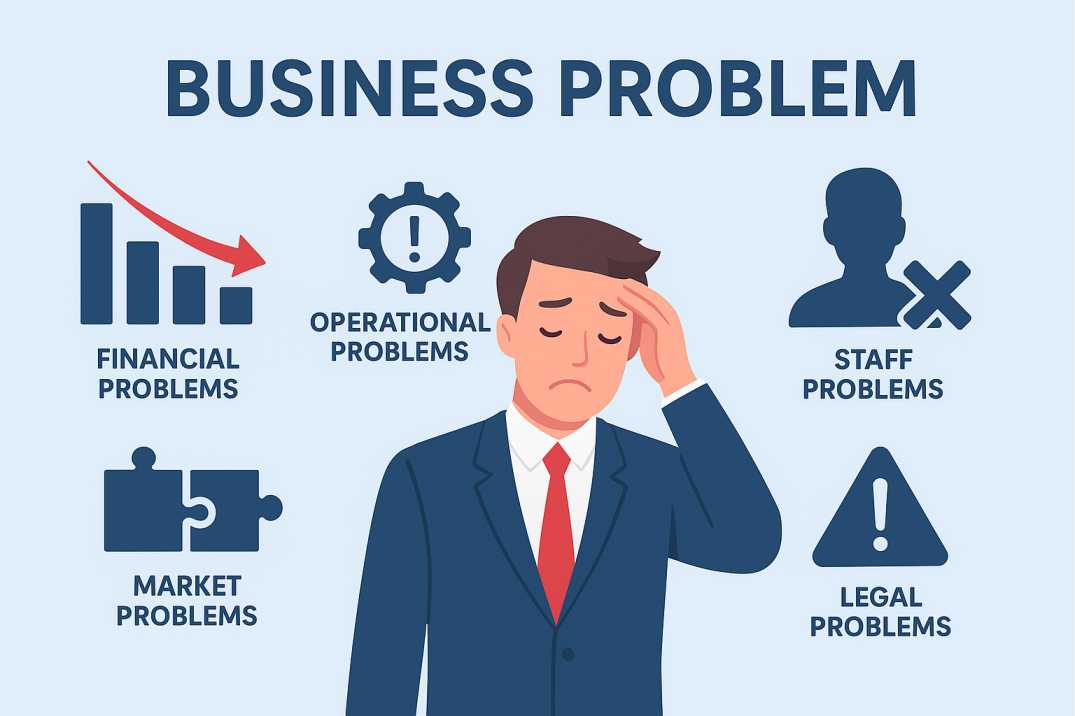
    Running a business is never smooth. Every company, whether small or big, faces challenges. These problems can come from inside the business (like money, employees, or management) or from outside the business (like government rules, economy, or competitors).

    Here are the main problems explained in detail:

    1. Financial Problems (Money-Related Issues)

    Money is the lifeline of every business. Without proper cash flow, even a profitable business can collapse.

    • Cash flow gap – Many businesses sell products/services on credit, but expenses like rent, salaries, and bills have to be paid immediately. If customers delay payments, the business suffers.
    • Raising funds – Getting loans from banks can be tough if the company is small or lacks collateral (assets like land or property). Investors may also hesitate if financial records are weak.
    • Bad debts – Some customers never pay, which becomes a direct loss.
    • Rising costs – Raw materials, transport, salaries, and electricity bills often go up, while selling prices may not increase equally.

    👉 Example: A garment shop sells ₹10 lakh worth of clothes on credit in February but customers pay only in June. In March, April and May, the shop struggles to pay salaries and rent.

    2. Market & Competition Problems

    Every business has to deal with changing markets and competition.

    • Too many competitors – Hard to maintain customers when there are many options.
    • Price pressure – If a competitor reduces prices, customers may shift, forcing the business to cut prices and profits.
    • Changing customer preferences – What customers like today may not be in demand tomorrow (e.g., Nokia mobiles lost market share when smartphones arrived).
    • Market saturation – Sometimes, almost everyone already has the product/service (e.g., SIM cards, cable TV connections). In such cases, growth is slow.

    👉 Example: A local cafe struggles when a big coffee chain opens nearby with better offers.

    3. Operational Problems (Day-to-Day Work Issues)

    Operations mean how the business runs every day. Problems here directly affect efficiency.

    • Inefficient processes – Using outdated methods or manual work increases costs and delays.
    • Supply chain issues – Raw materials may arrive late or be too expensive.
    • Over-dependence – Relying only on one supplier or one big customer is risky. If they stop, the business may collapse.
    • Technology gap – If the business doesn’t adopt modern technology (like digital payments or online sales), it loses out to competitors.

    👉 Example: A small manufacturer cannot deliver on time because raw material from China is delayed, so clients shift to another supplier.

    4. Human Resource Problems (People Issues)

    Employees are the backbone of a company, but managing them is tough.

    • Hiring skilled workers – Talented employees prefer bigger companies with higher pay.
    • High turnover – Employees leave for better salaries, creating instability.
    • Low productivity – Untrained or unmotivated workers slow down business.
    • Conflicts – Disagreements between staff or with management hurt teamwork.

    👉 Example: A software startup loses its best developers to bigger IT companies, delaying projects and losing clients.

    5. Legal & Compliance Problems (Rules & Regulations)

    Businesses must follow government laws, but frequent changes create problems.

    • Changing rules and regulations– Tax laws, GST rates, labour laws, or industry policies may change suddenly.
    • Penalties & Fines – Late filing of GST or ROC returns results in fines.
    • Intellectual property theft – Competitors may copy your product, logo, or design.
    • Licensing issues – Missing permits can shut down operations.

    👉 Example: A restaurant runs without a proper food license (FSSAI). Authorities raid and close it, causing huge loss.

    6. Management & Strategy Problems

    Bad management decisions often create bigger troubles.

    • No clear vision – Businesses fail if they don’t know their long-term goal.
    • Poor planning – Spending too much money on the wrong things.
    • Resistance to change – Sticking to old ways when the market is changing fast.
    • Dependence on one person – If the founder or one key manager leaves, the business struggles.

    👉 Example: Kodak ignored digital cameras and focused only on film cameras, which ruined the company.

    7. External Problems (Outside Control)

    Some problems are not in the business’s control but still affect it.

    • Economic slowdown – People spend less during recession, so sales fall.
    • Inflation – Prices of materials rise, reducing profit margins.
    • Government policies – New taxes, import/export restrictions, or bans can hurt industries.
    • Natural disasters / pandemics – Events like floods, earthquakes, or Covid-19 can suddenly stop business operations.

    👉 Example: During Covid-19, gyms, theatres, and travel businesses faced total shutdowns.

    And there are other problems time to time they occur. Because of these problems sometime a business try to quit and then BizzXchange helps in solving these problems.

  • Due Diligence Checklist

    Due Diligence Checklist

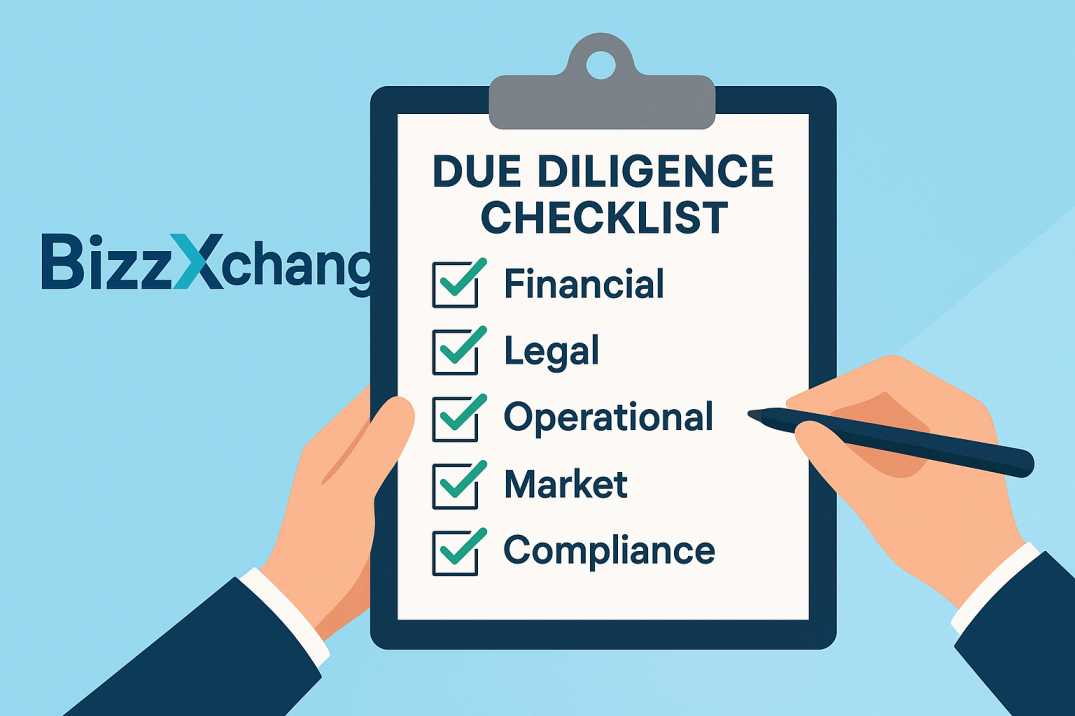
    1. Financial Due Diligence

    • ✅ Review last 3–5 years audited financial statements (P&L, Balance Sheet, Cash Flow).
    • ✅ Check bank statements for consistency with reported revenues.
    • ✅ Verify outstanding debts, loans, and overdrafts.
    • ✅ Analyze tax returns filed and confirm there are no pending disputes.
    • ✅ Review accounts receivable (who owes money, how old are the dues).
    • ✅ Review accounts payable (suppliers/vendors waiting for payment).
    • ✅ Confirm value and condition of assets (machinery, land, inventory, vehicles).
    • ✅ Look at profit margins, sales trends, and seasonality.

    2. Legal Due Diligence

    • ✅ Verify business registration documents (Certificate of Incorporation, GST, PAN, TAN).
    • ✅ Check all licenses and permits are valid (industry-specific approvals).
    • ✅ Review MOA, AOA, partnership agreements, LLP deed (as applicable).
    • ✅ Check for ongoing or past litigation (labour disputes, consumer cases, supplier cases).
    • ✅ Verify intellectual property rights (patents, trademarks, copyrights).
    • ✅ Review rental/lease agreements of office, factory, or warehouse.
    • ✅ Ensure compliance with labour laws (PF, ESI, gratuity, bonus).

    3. Operational Due Diligence

    • ✅ Inspect machinery, IT systems, software, and equipment (age, efficiency, maintenance).
    • ✅ Review supplier and vendor contracts (terms, duration, dependence on few suppliers).
    • ✅ Check customer contracts (especially long-term or bulk buyers).
    • ✅ Assess inventory quality (no expired, obsolete, or damaged stock).
    • ✅ Review IT systems, ERP, or CRM software being used.
    • ✅ Analyze business processes (are they well-documented or founder-dependent?).

    4. Human Resource Due Diligence

    • ✅ Review list of employees, their designations, and salaries.
    • ✅ Check employment contracts and non-compete agreements.
    • ✅ Verify PF/ESI contributions and labour law compliance.
    • ✅ Understand dependency on key employees or the founder.
    • ✅ Identify pending dues (gratuity, bonus, incentives).

    5. Market & Strategic Due Diligence

    • ✅ Analyze industry trends (growing, stable, or declining).
    • ✅ Study competitor landscape (pricing, market share, threats).
    • ✅ Review customer concentration risk (is revenue dependent on 1–2 clients?).
    • ✅ Assess brand reputation and goodwill in the market.
    • ✅ Check distribution channels, sales partners, and online presence.
    • ✅ Evaluate growth potential & scalability of the business.

    6. Valuation & Deal Structure

    • ✅ Decide on valuation method (Asset-based, Income-based, or Market-based).
    • ✅ Check if asking price includes goodwill (and whether it’s justified).
    • ✅ Plan payment structure (lump sum, installments, or earn-out based on performance).
    • ✅ Negotiate warranties and indemnities (seller takes responsibility for hidden liabilities).
    • ✅ Finalize non-compete clause (seller cannot start same business immediately).

    ✅ Final Step: Professional Involvement

    Before closing the deal:

    • Hire a Chartered Accountant (CA) → for financial audit.
    • Hire a Lawyer → for legal compliance, contracts, and liabilities.
    • Hire an Industry Expert → for operational and market analysis.
  • How to sale or transfer the Trademark in india along with business?

    How to sale or transfer the Trademark in india along with business?

    Transfer of Trademark (TM) along with Business is Important aspect.

    To sell or transfer a trademark along with a business in India, you must draft a detailed Trademark Assignment Agreement outlining the transfer of ownership, then file Form TM-P with the Trademark Registry, submitting the agreement and other supporting documents within six months of the transfer date. The Registrar will review the application, may require you to publish the assignment, and finally registers the assignee as the new owner. 

    1. Draft a Trademark Assignment Agreement 

    • Create a Legally Binding Document:

    This agreement should clearly define the rights being transferred, the names of the assignor (current owner) and assignee (new owner), the trademark registration number, and the consideration (price or compensation).

    • Include Key Details:

    The agreement should also include the date of transfer, the scope of the transfer (complete or partial), and any other agreed-upon conditions.

    2. Gather Required Documents

    • Assignment Agreement:

    The signed Trademark Assignment Agreement is the primary document. 

    • Proof of Identity:

    Identification documents for both the assignor and assignee (e.g., PAN, Aadhaar, passport) are necessary. 

    • No Objection Certificate (NOC):

    A formal No Objection Certificate from the original owner (assignor) is required to confirm the transfer of rights. 

    • Power of Attorney (if applicable):

    If you are hiring a lawyer or agent to handle the process, you will need to provide a Power of Attorney. 

    Also Read | How fixed assets can be valued while takeover of business?

    3. File Form TM-P

    • Submit to the Trademark Registry: File Form TM-P with the Indian Trademark Office, either by the assignor, the assignee, or both. Legal team of BizzXchange helps in filing of TM-P. 
    • Pay the Fee: You must pay the required government fees for the trademark transfer. 

    4. Wait for Registrar’s Approval

    • Application Processing:

    The Trademark Registrar will review the application and documents submitted. 

    • Address Objections:

    The Registrar may raise objections, which must be addressed by the applicant within the specified timeframe. 

    • Advertisement:

    The Registrar may direct you to publish the assignment in the Trademark Journal. 

    • Final Registration:

    Once the Registrar is satisfied with the application and all requirements, the assignment will be approved, and the assignee will be registered as the new owner of the trademark. 

    5. Update Business Records 

    • Maintain Records: Ensure that all your legal and company records are updated to reflect the new trademark owner.
  • What is due diligence in takeover of company?

    What is due diligence in takeover of company?

    what is due diligence in takeover of company?

    Due diligence is a critical analysis of all aspects of the takeover to justify the purchase cost. It is generally made by buyer and their professional. It determines and confirms the accuracy of information provided by the seller and to identify the risk, reward and other threats and opportunities. A perfect process helps the buyer to make a right decision, fair market value and identify the hidden aspects and cost.

    Key purposes of due diligence

    *Price determination: Due diligence help is price determination with deeply analysis.

    *Risk identification: Due diligence also help in risk identification associated with takeover of the company or business.

    Efficient decision making: It also help in fast and efficient decision making.

    *Negotiation leverage:  Any issues uncovered during the process can be used as leverage to negotiate more favourable terms in the purchase agreement, such as a lower price or specific indemnities.

    *Future planning : It provide a proper road map to run the business after takeover as internal issues, risk and opportunities being identified in this.

    Process and aspects of due diligence:

    *Legal Aspects-Litigation on and by the company etc.

    *Taxation and Financial Aspects- Analise the whole legal aspect of the company for example Taxation, MCA matter, GST Matter, Cash Flow, Fund Flow, Debt structuring etc.

    *Market Aspects-for example Customer demand, Customer base, Growth aspect, Company market position

    *Environmental Aspects- for example what measures taken to avoid environment pollution by company

    *Operational aspects- for example Company Day to day operation, supply chain, production, technologies etc. 

    Also, many critical aspects of company can be covered by the buyer.

    Due Diligence Team

    It is the core team responsible for carrying out the due diligence and may consist of the following personnel:

    *Legal team of the buyer – BizzXchange helping also helping as part of legal team

    *Valuation advisor of the buyer- BizzXchange helping also helping as part of valuation advisors

    *Merchant Bankers/Chartered Accountants of the buyer- BizzXchangehelping also helping in providing the suitable CA and Marchant Banker

    *Management representative of the buyer

    *Technical consultants of the buyer

  • Can a unlisted company raise money via equity?

    Can a unlisted company raise money via equity?

    Yes — an unlisted company (i.e., not listed on a stock exchange) can raise more equity, but the process and options differ from a listed company.

    Here’s how it works:

    Ways an Unlisted Company Can Raise More Equity (i.e. Raising of money via Equity)

    1. Private Placement
      • Issue new shares to a select group of investors (e.g., high-net-worth individuals, private equity funds, venture capitalists, or strategic partners).
      • Requires board and shareholder approval.
      • Must comply with your jurisdiction’s corporate laws (e.g., Companies Act in India).
    2. Rights Issue
      • Offer existing shareholders the right to buy additional shares before offering them to others.
      • Maintains shareholder proportion if they participate.
    3. Employee Stock Option Plans (ESOPs)
      • Issue shares to employees as part of compensation or incentives.
      • Often used to attract and retain talent without immediate cash flow impact.
    4. Angel & Venture Capital Investment
      • Early-stage companies often raise equity from angel investors or venture capital firms.
      • These investors expect higher returns and usually negotiate significant influence or board seats.
    5. Private Equity
      • Suitable for more mature unlisted companies looking for large capital inflows for expansion, acquisitions, or restructuring.

    Key Considerations while deciding for Issue of Equity

    • Valuation: Needs to be agreed upon, often via negotiation rather than public market pricing.
    • Dilution: Issuing new shares reduces the percentage ownership of existing shareholders unless they participate.
    • Regulatory Compliance: Corporate law usually sets limits on the number of investors and the process for issuing shares.
    • Shareholder Agreements: Important to clearly define rights, responsibilities, and exit options for new investors.
    • BizzXchange helps you in raising of fund via Equity for your Startups and help in finding business investors or selling of business.

  • How to sell your Business

    How to sell your Business

    How to sale running business in some easy steps for you understanding

    Selling your business as a whole (also called a business exit or full business sale or sell running business online or sell my business) involves various steps to maximize value, minimize risk, and ensure legal and financial compliance.

    Here’s a practical step-by-step guide:

    ✅ 1. Prepare Your Business for Sale Before approaching buyers, make your business as attractive as possible.

              Key Actions:.

              • Organize Financials: Have 3–5 years of clean financial statements (P&L, balance sheet, tax returns). .

              • Settle Legal/Compliance Issues: Resolve disputes, update licenses, review contracts..

              • Document Operations: SOPs, employee roles, supplier/customer agreements..

              • Optimize Profitability: Cut inefficiencies, show stable or growing revenue..

              • Value Your Business: Get a business valuation (use a broker or valuation expert).

              • Competitors .

    ✅ 2. Decide How to Sell You have a few options: Option Description Broker A business broker helps find buyers and manages the sale online (good for small to mid-sized businesses). M&A Advisor Better for larger companies. Sell Direct You find a buyer yourself (e.g., employee, competitor, investor). Marketplace List on platforms like BizzXchange. 

    ✅ 3. Find a Buyer Market your business confidentially to avoid disrupting operations. Potential Buyers:

              • Competitors

              • Investors (private equity, VC)

              • Employees (via ESOP or management buyout)

              • Individuals (entrepreneurs)

              • Strategic buyers (companies seeking growth or synergy)

    ✅ 4. Negotiate and Structure the Deal This includes terms like price, payment structure, and transition period.

             Common Deal Structures:

             • Asset Sale: Buyer buys specific assets/liabilities.

             • Stock Sale: Buyer purchases all company shares (common in corporations).

             • Earnout: Part of the payment depends on future performance. Involve professionals:

             • Chartered Accountant

             • Business broker or M&A advisor

             • Business attorney

    ✅ 5. Due Diligence The buyer and or his consultant will inspect financials, operations, legal issues, etc. Be transparent and responsive.

    ✅ 6. Finalize Legal Documents Work with an attorney to draft and review:

             • Purchase Agreement

             • Non-compete agreements

             • Transition agreements (if you’ll stay on temporarily)

             • Asset/stock transfer documents, BizzXchange help in executing the finalise legal documents

    ✅ 7. Close the Deal Sign documents, transfer ownership, and receive payment. Inform stakeholders (staff, customers, vendors) as appropriate.

    ✅ 8. Transition and Exit Assist the buyer in taking over smoothly — you may stay for a transition period (30–180 days).